
Short answer: How warm should your house be in winter? For most Detroit households, 68 degrees while you are home and awake is the sweet spot between comfort and a manageable DTE bill. Dropping the thermostat 7 to 10 degrees while you sleep or are at work can cut heating and cooling costs by as much as 10% a year, according to the U.S. Department of Energy. Keep indoor humidity between 30% and 50%, and keep homes with older adults at 68 degrees or warmer.
Below you’ll find a degree-by-degree table, settings for different households, what “heat on aux” means, and every major program that helps Michigan families pay winter heating bills. Like the rest of our Detroit news and local guides, it is written for this city: long freezing stretches, lots of older houses, and DTE rates.
Last updated Nov. 17, 2026. Program details were checked against state, utility, and city sources on that date.
In this guide:
- Is 65, 68 or 70 degrees cold? The Detroit temperature ladder
- Best thermostat settings by household
- When is it cold enough to turn the heat on?
- What humidity should your house be in winter?
- What “heat on aux” means
- How to lower your DTE heating bill
- Help paying your heating bill
- Renters: what your landlord must provide
- Staying warm safely
- FAQ
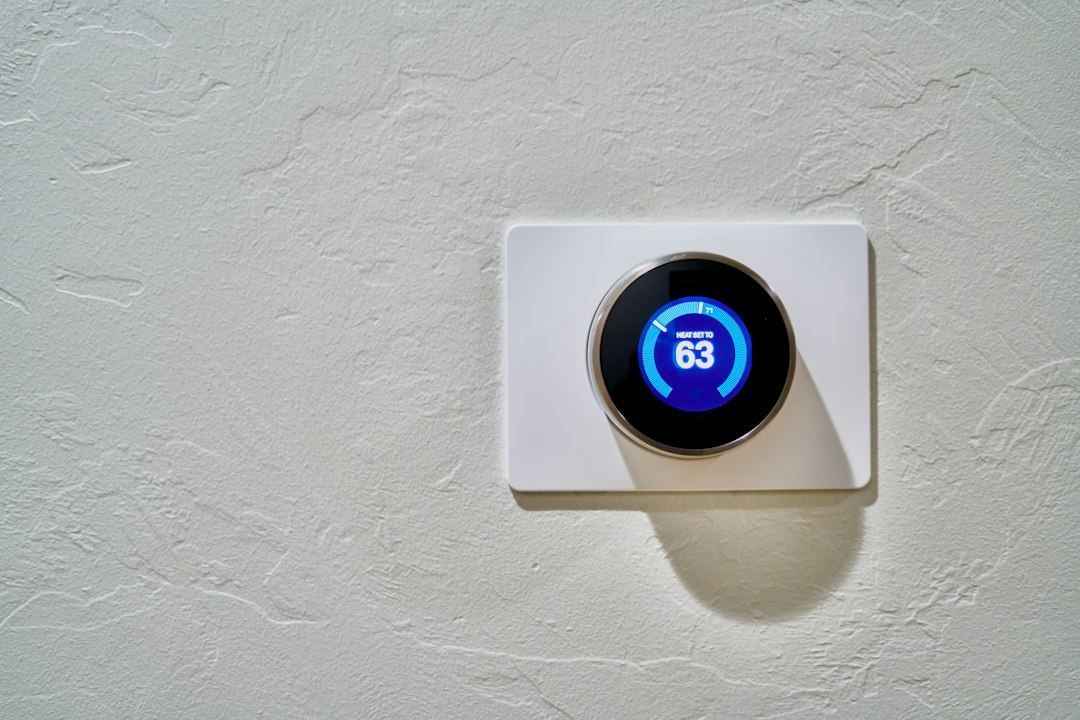
Is 65, 68 or 70 degrees cold? The Detroit temperature ladder
Whether a temperature feels cold depends on who is in the house, what they are doing, and how drafty the rooms are. Health and energy agencies do give useful anchor points, though. The Department of Energy suggests starting around 68 to 70 degrees when you are home and adjusting from there. The World Health Organization calls 18°C (about 64 degrees) a safe minimum for the general population in cold climates, and says older people, children and people with chronic illness may need it warmer. The National Institute on Aging tells older adults to set the heat to at least 68 degrees.
| Thermostat setting | How it usually feels | Who it suits | Watch out for |
|---|---|---|---|
| 60-62°F | Cold indoors; sweaters and blankets needed | Overnight or away setback for healthy adults in a tight house | Too cool for older adults; NIA says 60-65°F homes can lead to hypothermia in older people |
| 64-65°F | Cool; fine if you are active | Sleeping hours, people moving around a lot | Right at the WHO minimum; not for vulnerable household members |
| 68°F | Comfortable with normal indoor clothes | Most households while awake; the minimum for older adults | Drafty rooms and basements may still feel chilly |
| 70°F | Warm and cozy | Homes with babies, older adults or anyone who runs cold | Each extra degree raises your bill; seal drafts first |
| 72°F and up | Warm; can feel stuffy | People with medical advice to stay warmer | Highest cost; dry air if humidity is low |
Is 65 degrees cold?
For a healthy adult in a sweater, 65 is cool but livable, and it works well as a nighttime setting. It is not a good all-day temperature for older adults. The NIA warns that even mildly cool homes in the 60 to 65 degree range can lead to hypothermia in older people, who may not notice how cold they are getting.
Is 68 degrees cold?
No. Sixty-eight is the Department of Energy’s suggested starting point, and it keeps most people comfortable in normal indoor clothing without running up the bill. If 68 feels cold in your house, the problem is often drafts, single-pane windows, or cold floors over an unheated basement rather than the thermostat number. Feel around windows and doors for moving air before you turn it up.
Is 70 degrees cold?
Seventy is warm for winter. It is a reasonable choice when someone in the home is very young, older, ill, or always cold. Just know that every degree above 68 adds cost over a long Michigan heating season, so it pays to fix air leaks before you set it higher.
Best thermostat settings by household
One number won’t fit every house. Use this as a starting schedule and adjust a degree at a time.
| Household | Home and awake | Asleep or away | Why |
|---|---|---|---|
| Working adults, house empty all day | 68°F | 7-10°F lower for 8+ hours | DOE says this setback can save up to 10% a year |
| Someone home all day | 68°F | A few degrees lower at night | Comfort during the day, savings while sleeping |
| Older adults (65+) | 68°F or higher | Keep at 68°F | NIA advice: cold homes raise hypothermia risk |
| Babies, young kids or chronic illness | 68-70°F | Avoid deep setbacks | WHO says vulnerable groups may need more than 64°F; follow your doctor |
| Leaving town | Not applicable | Lower, but never off | Unheated walls and crawl spaces can freeze pipes |
If you are heading out of town, don’t shut the heat off. Pipes in exterior walls, crawl spaces, and basements are the first to freeze in a Detroit cold snap. Our guide to preventing and thawing frozen pipes in Detroit covers prevention, safe thawing, and how to shut off your water.
When is it cold enough to turn the heat on?
Turn the heat on when your indoor temperature drops below about 64 degrees, the WHO’s safe minimum, or below 68 if an older adult lives with you. Don’t go by the outdoor reading alone. A sunny 45-degree afternoon can leave a well-insulated house comfortable, while a windy 40-degree night can chill a drafty bungalow fast.
In practice, most Detroit homes need steady heat from late fall through early spring. National Weather Service climate normals (1991-2020) for Detroit Metro Airport put the average high at 37.2 degrees in December, 32.3 in January and 35.2 in February, with average lows of 25.3, 19.2 and 20.8. That means months of overnight lows well below freezing.
Two practical tips before the first real cold week:
- Test the furnace early. Run it on a mild day so you find problems before the repair queue fills up.
- Change the filter and clear the vents. DTE advises keeping furniture and curtains away from vents and radiators so warm air can circulate.
What humidity should your house be in winter?
Aim for 30% to 50% relative humidity. The EPA recommends keeping indoor humidity below 60% and ideally in that 30% to 50% range to limit mold. A digital hygrometer, which costs little at any hardware store, tells you where you stand.
Detroit winters push humidity in both directions. Heating cold outdoor air makes it very dry indoors, which many people notice as static shocks, dry skin, or a scratchy throat. Older homes with poorly sealed windows can have the opposite problem in kitchens, bathrooms, and basements.
| What you notice | Likely humidity | What to do |
|---|---|---|
| Static shocks, dry skin, cracked lips | Below 30% | Use a humidifier and clean it as the maker directs; keep the reading under 50% |
| Water or frost on inside of windows | Too high for the outdoor temperature | Turn the humidifier down, run bath and kitchen fans, open blinds for airflow |
| Musty smell, mold spots, damp basement walls | Above 50-60% | Run a dehumidifier, fix leaks, dry wet areas fast |
Persistent damp in a basement is often a water problem rather than a humidity problem. If you see seepage or have had backups, read our Detroit basement flooding and sump pump guide.
What “heat on aux” means on your thermostat
“Aux” means auxiliary heat. If you have a heat pump, it is a backup heat source that switches on by itself when the heat pump can’t keep up. In most systems, that backup is electric resistance heating in the indoor unit. In dual-fuel systems, it can be a gas furnace.
According to heat pump maker Carrier, aux heat usually kicks in during three situations:
- Very cold weather. Once it gets cold enough outside, the heat pump alone can’t hold your setting. For many single-stage systems, this happens around freezing, although the exact point depends on the equipment.
- A big jump on the thermostat. Raising the setting more than 2 or 3 degrees at once can call for backup heat.
- Defrost cycles. When the outdoor unit ices up and defrosts, aux heat keeps the air coming out of your vents warm.
Seeing “aux” now and then on a frigid January night is normal. Seeing it constantly on a mild day is not, and it is worth a service call, because electric resistance heat costs much more to run than the heat pump itself. To keep aux use down, raise the temperature a degree or two at a time instead of all at once after a setback.
Aux vs. emergency heat: Aux runs automatically alongside the heat pump. Emergency heat (“EM heat”) is a setting you choose by hand. It shuts the heat pump off and runs only the backup. Use it only if the heat pump has failed; then call a licensed HVAC technician.
How to lower your DTE heating bill without freezing
The thermostat is your biggest lever, but small fixes add up over a long Michigan heating season. These come from DTE’s own efficiency tips and the Department of Energy:
- Set it back on a schedule. Lowering the temperature 7 to 10 degrees for at least 8 hours a day can save as much as 10% a year, according to the DOE. A programmable or smart thermostat does it for you.
- Go a degree or two lower. DTE suggests nudging the winter setting down a degree or two and setting it lower while you sleep or are away.
- Run ceiling fans clockwise. On low, this pushes warm air near the ceiling back down into the room.
- Use the sun. Open curtains and blinds on sunny days and close them at night.
- Seal drafts. Weatherstrip doors and windows. Plastic window film or thermal curtains help on older single-pane windows.
- Keep vents and radiators clear. A couch blocking a register means rooms take longer to warm.
- Call before you fall behind. If a winter bill looks unmanageable, ask DTE at 800-477-4747 about a payment agreement or the assistance programs below.
One myth to drop: the idea that a furnace works so hard to warm a house back up that setbacks don’t save money. The DOE’s guidance is the opposite. Lowering the temperature for long stretches saves energy. The exception is heat pumps, where big jumps can trigger costly aux heat, so smaller setbacks and gradual recovery work better.
Help paying your heating bill in Detroit
If keeping the house at 68 means falling behind on bills, ask for help before you get a shut-off notice. Michigan has several programs, and several work together. The income figures below are the Michigan Public Service Commission’s 2025-2026 guidelines for a one-person household; limits rise with household size.
| Program | What it does | Who qualifies | How to apply |
|---|---|---|---|
| Winter Protection Plan (low income) | Protects against shut-off Nov. 1 to March 31; you pay at least 7% of your estimated annual bill each month | At or below 150% of poverty ($23,475 for one person) and receiving cash assistance, SSI, SNAP or Medicaid; must show you applied for heating aid | Call your utility; DTE: 800-477-4747 |
| Senior shut-off protection | Protects customers 65 and older from shut-off Nov. 1 to March 31 | Age 65+ | Call your utility to confirm eligibility |
| State Emergency Relief (SER) | Help with past-due bills, shut-off notices, deliverable fuel or energy-related home repairs | At or below 150% of poverty, with a past-due or shut-off notice or other verified need; asset limits apply | Online at MI Bridges |
| Michigan Energy Assistance Program (MEAP) | Payments toward energy bills through local agencies | At or below 60% of state median income ($36,517 for one person), or enrolled in SER, SNAP, SSI and other listed programs | Call 2-1-1 to be connected with a MEAP provider |
| Home Heating Credit | State credit toward heating costs | At or below 110% of poverty ($17,215 for one person); owners and renters | File the Home Heating Credit form between Jan. 1 and Sept. 30 |
| THAW (The Heat and Warmth Fund) | Utility help for heat, electricity and water | Income-qualified Michigan households | New applications were paused as of early November; call 800-866-8429 for status |
A few things people miss:
- The Winter Protection Plan isn’t forgiveness. Any past-due balance is spread into monthly payments, and you need to settle what you owe before the next heating season.
- DTE says you cannot apply for SER while you are enrolled in its Winter Protection Plan. Ask which route makes more sense before signing up.
- Don’t wait for THAW alone. With its new application pause, 2-1-1 is a direct way to reach MEAP agencies and other help in Wayne County.
Full details are on the MPSC’s help page for utility customers.
Renters: what your Detroit landlord must provide
If your landlord controls the heat and the apartment stays cold, you aren’t stuck. The City of Detroit’s landlord compliance checklist requires that a rental’s heating system work and be able to provide at least 68 degrees. Gas and electric service must also be on and working.
- Tell your landlord in writing, with dates and indoor temperature readings. Photos of a thermometer help.
- Contact the city. Detroit’s Buildings, Safety, Engineering and Environmental Department (BSEED) enforces rental rules; its rental information is at detroitmi.gov/rental. Violations can bring tickets starting at $400.
- Ask about rent escrow. The city’s guide says tenants in noncompliant rentals may be eligible to pay rent into escrow instead of to the landlord. Get legal advice before withholding any rent.
Staying warm safely when the heat isn’t enough
- Never heat your home with a gas oven, stove, or grill. These can produce carbon monoxide. Keep working CO alarms near sleeping areas.
- Use space heaters carefully. The NIA warns that some space heaters are fire hazards or can raise carbon monoxide risk. Keep them away from bedding and curtains, and turn them off when you leave the room.
- If you smell gas, leave. Get everyone outside, call 911, then call DTE’s gas leak line at 800-947-5000. Don’t flip switches on the way out.
- Know about warming centers. During dangerous cold, the City of Detroit opens warming centers and respite sites. Check detroitmi.gov or call 2-1-1 for locations.
- Lost power? Our Detroit power outage guide covers keeping warm, reporting outages to DTE, and food safety.
This guide is general information, not medical, legal or HVAC advice. For a furnace or heat pump problem, call a licensed technician. For health concerns about cold exposure, talk to a doctor.
Detroit winter heating FAQ
What temperature should I set my thermostat at night in winter?
Healthy adults can usually go 7 to 10 degrees below their daytime setting, so roughly 60 to 62 if you keep it at 68 during the day. Homes with older adults should stay at 68 or warmer. Heat pump owners do better with a smaller setback.
Is it cheaper to leave the heat at one temperature all day?
Generally no. The Department of Energy says setting the thermostat back for at least 8 hours a day can save up to 10% a year. Furnaces don’t use extra energy to “catch up” in a way that cancels the savings. Heat pumps are the main exception, because big jumps can switch on expensive aux heat.
What should the humidity be in a Michigan house in winter?
Between 30% and 50%, following EPA guidance. If you see water or frost on the inside of windows, the humidity is too high for the outdoor temperature. Turn the humidifier down or run exhaust fans.
Can DTE shut off my heat in the winter?
Shut-offs are possible, but Michigan protects customers 65 and older and income-qualified customers in the Winter Protection Plan from Nov. 1 to March 31. You need to contact DTE to enroll and keep up with the agreed payments.
Why does my thermostat say “aux heat” so often?
Aux heat runs when your heat pump can’t keep up, usually in very cold weather, during defrost or after you raise the setting several degrees at once. Frequent aux on mild days can point to a problem, so have a licensed HVAC technician check the system.
How warm does a Detroit landlord have to keep a rental?
The city’s landlord checklist requires a working heating system that can provide at least 68 degrees. Report problems to your landlord in writing, then to the city’s BSEED if they aren’t fixed.
The bottom line
Start at 68 degrees, set it back while you sleep or are out, and keep humidity between 30% and 50%. If anyone in the house is older or medically fragile, stay at 68 or warmer and skip deep setbacks. If the bill becomes the problem, call DTE or 2-1-1 before a shut-off notice arrives. For more Detroit news, weather updates, and practical local guides, check our daily Detroit news briefing.
Leave a Reply