
Updated Nov. 8, 2026
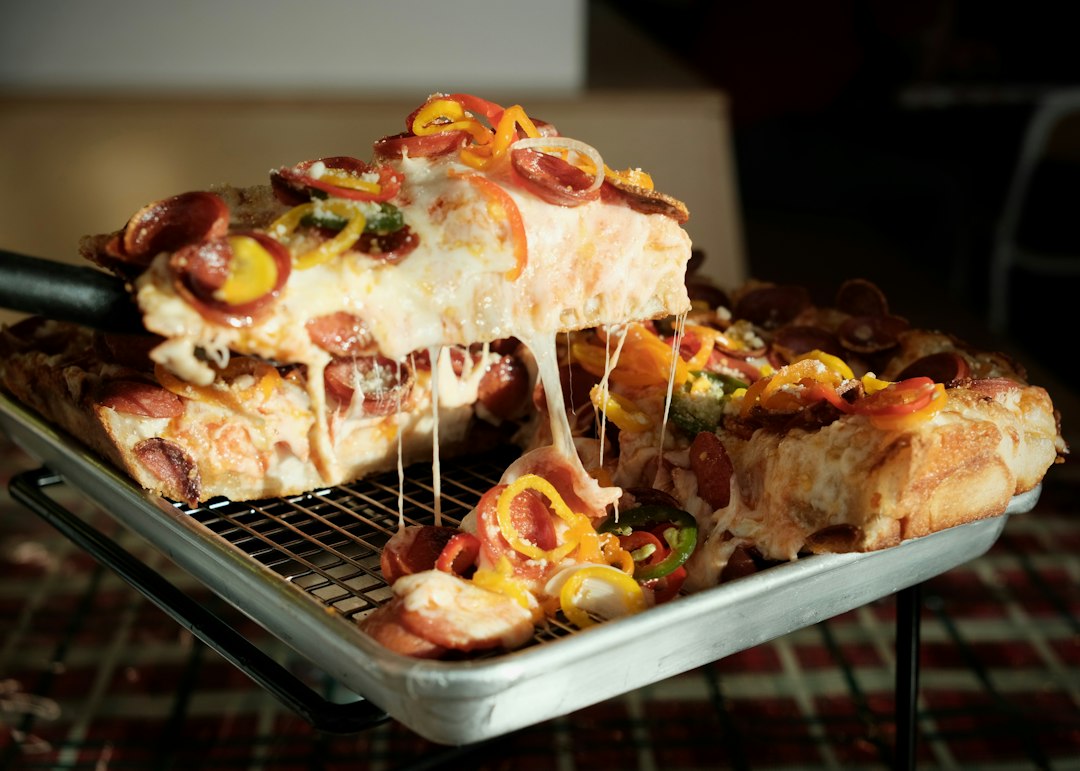
Is Detroit-style pizza deep dish? Not really. Both are baked in deep pans and both put the sauce on top, but they are different pizzas. Detroit-style is a rectangular pan pizza with a light, airy, focaccia-like crust and Wisconsin brick cheese baked into a crisp, caramelized edge. Chicago deep dish is round and pie-like, with a tall crust wall holding layers of mozzarella, toppings and chunky tomato sauce.
Below, you’ll find a side-by-side comparison, the real differences in crust, cheese and sauce, where each style came from, and how to pick the one you’ll like better.
- Is Detroit-style pizza deep dish?
- Comparison table
- Crust, cheese and sauce
- Where each style came from
- How to tell them apart
- Which one should you order?
- FAQs
Is Detroit-Style Pizza Deep Dish?
No. Detroit-style pizza is a pan pizza, and “deep” describes the pan it’s baked in, not the style. In Detroit, nobody orders “deep dish.” People order a square, even though the pans are rectangular.
The mix-up makes sense. Both styles are thick, both are baked in heavy, high-sided pans, and both reverse the usual order by putting cheese down first and sauce on top. Food Republic notes that both styles layer cheese before sauce for the same practical reason: a long bake in a deep pan would turn a sauced crust soggy.
The eating experience is where they split. A Detroit square is something you pick up with your hands, with a crunchy bottom and a soft, open crumb. A slice of Chicago deep dish is closer to a savory pie, and most people reach for a knife and fork.
Detroit-Style vs. Chicago Deep Dish at a Glance
Here is the quick version. Details vary from pizzeria to pizzeria, so treat this as the classic form of each style.
| Detroit-style | Chicago deep dish | |
|---|---|---|
| Shape | Rectangular, cut into squares | Round, cut into wedges |
| Pan | Heavy rectangular steel pan (blue steel at Buddy’s) | Round, seasoned, high-sided deep-dish pan |
| Crust | Wetter dough; thick but airy, like focaccia, with a crisp, almost fried bottom | Denser dough pressed up the sides; often buttery and pie-like |
| Cheese | Wisconsin brick cheese, spread to the pan’s edges | Mozzarella, laid directly on the dough |
| Layer order | Dough, toppings (pepperoni often pressed into the dough), cheese, sauce | Dough, cheese, toppings, chunky tomato sauce |
| Signature feature | Caramelized cheese edge (frico) | Tall crust wall around a thick filling |
| Classic topping | Pepperoni | Sausage |
| Bake time | About 13 to 14 minutes at Buddy’s | About 30 minutes at Lou Malnati’s; longer at home |
| How you eat it | By hand | Usually knife and fork |
| Origin | Buddy’s Rendezvous, Detroit, 1946 | The Pizzeria (later Pizzeria Uno), Chicago, 1943 |
The Real Differences: Crust, Cheese and Sauce
Crust: airy bread vs. pie shell
This is the biggest difference you’ll taste. Detroit dough uses more water, which gives it a soft, open interior that’s closer to focaccia than to pizza crust. The heavy steel pan fries the bottom and sides as it bakes, so you get crunch outside and chew inside.
Chicago dough is drier and denser. It’s patted into an oiled pan and pushed high up the sides to form a wall, and many versions are rich and buttery, more like a pie crust. Its job is to hold a heavy filling, not to be the star.
Cheese: brick to the edge vs. mozzarella on the bottom
Detroit-style traditionally uses Wisconsin brick cheese, which has a higher fat content than mozzarella. It’s scattered right to the pan walls, where it melts and caramelizes into a lacy, crunchy border. That edge is why corner pieces disappear first.
Chicago deep dish uses mozzarella, laid in slices directly on the dough. It stays soft and stretchy under the filling instead of crisping. The crust, not the cheese, forms the edge.
Sauce and toppings: stripes vs. a full layer
Both styles put sauce on top, but in different amounts. At Buddy’s, toppings go straight into the dough, cheese covers them, and tomato sauce is ladled over the top, often in stripes. Pepperoni is the classic choice.
At Lou Malnati’s, a sheet of sausage covers the cheese edge to edge, then a chunky tomato sauce covers everything, finished with a sprinkle of cheese and spices. On deep dish, the sauce is a full layer, not a garnish.
Bake time: minutes vs. half an hour or more
According to WDET, Buddy’s bakes its squares at 600 degrees for 13 to 14 minutes. Lou Malnati’s says its deep dish needs about 30 minutes, and some guides say a deep-dish pie can take close to an hour. If you’re ordering for a hungry group, that gap matters.
Where Each Style Came From
Chicago came first, by about three years. Deep dish dates to December 1943, when a restaurant called The Pizzeria opened at 29 E. Ohio St. It was later renamed Pizzeria Uno after a second location, Pizzeria Due, opened in 1955, and the original still operates at the same address.
Who invented it is still debated. Uno’s current corporate owners credit Ike Sewell. A talk by pizza historian Peter Regas, summarized by the Culinary Historians of Chicago, argues that Sewell likely had no role in the original creation and became a partner only through a 1944 agreement. Regas points to Ric Riccardo as the likely source of the first recipe and says the deeper pie known today probably took shape in the late 1950s and early 1960s. Regas’ research also credits Alice Mae Redmond, a cook hired in the 1940s, with reworking the dough. No one has definitively settled the question.
Detroit’s story is clearer. In 1946, Gus and Anna Guerra began serving square pizza at Buddy’s Rendezvous, their bar at Six Mile and Conant on the city’s east side. As WDET reported, the recipe drew on Anna’s family’s Sicilian sfincione, and the original pans came from a local auto plant, where they had been used to hold nuts and bolts. The Guerras sold Buddy’s in 1953 and opened Cloverleaf.
For decades, Detroit-style stayed mostly local. WDET credits Shawn Randazzo’s win at the International Pizza Expo in 2012 with helping push it onto menus nationwide. Our complete guide to Detroit-style pizza covers the full origin story and where to try it around town.
How to Tell Detroit-Style From Chicago Deep Dish: 5 Quick Checks
Menus outside the Midwest often blur the two, and some chains use “deep dish” loosely. Use these checks to know what you’re actually getting.
- Look at the shape. Rectangular and cut into squares points to Detroit-style. Round and cut into wedges points to Chicago deep dish.
- Check the edge. A dark, crunchy rim of caramelized cheese means Detroit-style. A tall wall of crust around the filling means Chicago.
- Check the sauce. Stripes or ladles of sauce over the cheese suggest Detroit-style. A full layer of chunky sauce covering everything suggests Chicago.
- Lift a piece. If it holds its shape in your hand with an airy, bready middle, it’s Detroit-style. If the filling slumps and you need a fork, it’s Chicago.
- Ask about the cheese and the wait. Brick cheese and a quick bake point to Detroit-style. Mozzarella and a wait of half an hour or more point to Chicago deep dish.
Which One Should You Order?
Neither is better. They suit different moods and appetites.
- Order Detroit-style if you love crispy edges and corner pieces, want something you can eat with your hands, or like a crust that’s thick but not heavy.
- Order Chicago deep dish if you want a sit-down, knife-and-fork meal, love a lot of sauce, or are the type who orders extra cheese.
- Feeding a crowd on a schedule? Detroit-style bakes much faster and cuts into easy squares, which makes it a natural fit for game days and parties.
- Not sure? Detroit-style is the lighter of the two, so it’s the easier place to start.
Detroit vs. Chicago Pizza FAQs
Which is thicker, Detroit-style or Chicago deep dish?
Both are thick, but in different ways. Detroit-style has the thicker bread layer, a tall, airy crust with a crisp bottom. Chicago deep dish has a thinner, denser crust that rises up the sides of the pan, and its height comes from the cheese, toppings and sauce piled inside.
Do both styles put the sauce on top?
Yes. Both put cheese down first and sauce on top, which keeps the crust from getting soggy during a long bake in a deep pan. The difference is quantity: Detroit-style usually gets stripes or ladles of sauce, while Chicago deep dish is covered in a full layer of chunky tomato sauce.
Which came first, Detroit-style or Chicago deep dish?
Chicago deep dish came first. The Pizzeria, later Pizzeria Uno, opened in Chicago in December 1943. Detroit-style followed in 1946 at Buddy’s Rendezvous on Detroit’s east side. Detroit’s style traces back to Sicilian sfincione, not to Chicago’s pie.
Do you eat Detroit-style pizza with a fork?
Usually not. Detroit-style squares are sturdy enough to eat by hand, thanks to the crisp, fried bottom. Chicago deep dish is a different story: its filling is thick and saucy, so most people use a knife and fork, and Lou Malnati’s own instructions say to grab both.
The Bottom Line: Detroit-Style Pizza Isn’t Deep Dish
Detroit-style pizza isn’t deep dish. It’s a rectangular pan pizza built around an airy crust and a caramelized brick-cheese edge, while Chicago deep dish is a round, pie-like dish built around its filling. If you’re in Detroit, start with a square from one of the original pizzerias, then explore the rest of the city’s classics in our guide to what food Detroit is known for.
Sources: WDET, “CuriosiD: Who made Detroit-style pizza first?” (Nov. 10, 2022); Culinary Historians of Chicago, “The Origins of Deep-Dish Pizza” (May 13, 2021); Lou Malnati’s, “How to Make a Deep Dish Pizza”; Food Republic (Dec. 13, 2023); Tasting Table (Jan. 11, 2025).
Leave a Reply