


If you live anywhere near Detroit, the auto industry isn’t background noise. It’s the thing that shapes your paycheck, your neighbor’s job, the price of your next car, and even what your mechanic charges to fix it. You don’t need to have ever set foot on a factory floor for this to matter — what happens inside GM, Ford, and Stellantis boardrooms tends to show up in your life eventually, whether that’s a higher window sticker, a plant retooling notice, or a name on next November’s ballot.
2026 has been a turbulent year for the Detroit auto industry. Tariffs are reshaping how vehicles get built and priced. The electric vehicle boom automakers bet billions on has cooled off fast. AI and automation are quietly changing what “a good auto job” even looks like. And a wide-open governor’s race is putting Michigan’s auto future on the ballot.
Here’s the Detroit auto industry news that actually affects daily life right now — broken into 10 things, with a plain answer to “how does this affect me?” in each one.
1. Will Your Next Car Cost More or Less?
If you’re shopping for a new vehicle, brace for uncertainty rather than a clean answer. Car prices in Detroit and across Michigan are being squeezed by tariffs that automakers are largely passing along in some form.
General Motors has told investors it expects gross tariff-related expenses of $2.5 billion to $3.5 billion in 2026 — money that could eat up more than a fifth of its operating profit. Ford has pegged its net tariff hit at roughly $1 billion, and Stellantis has flagged a similar headwind of $1 billion to $1.2 billion for the year.
It could get worse before it gets better. Ahead of new trade talks with Mexican officials, Detroit’s automakers are warning the Trump administration that proposed changes to the North American trade deal — including a rule requiring vehicles to contain at least 50% U.S.-made content — could add another $2 billion a year in costs for each of the Big Three.
What this means for you: New vehicle prices aren’t moving in one predictable direction. The companies most exposed to these costs are the ones building the most vehicles in North America, so it’s not simply “foreign cars get more expensive.” If you’re planning a purchase, check how a specific automaker is handling tariff costs — some are trimming incentives to protect margins, while others are discounting more heavily to keep sales moving — before assuming prices will land where you expect.
2. Could Changes in the Auto Industry Affect Your Job?
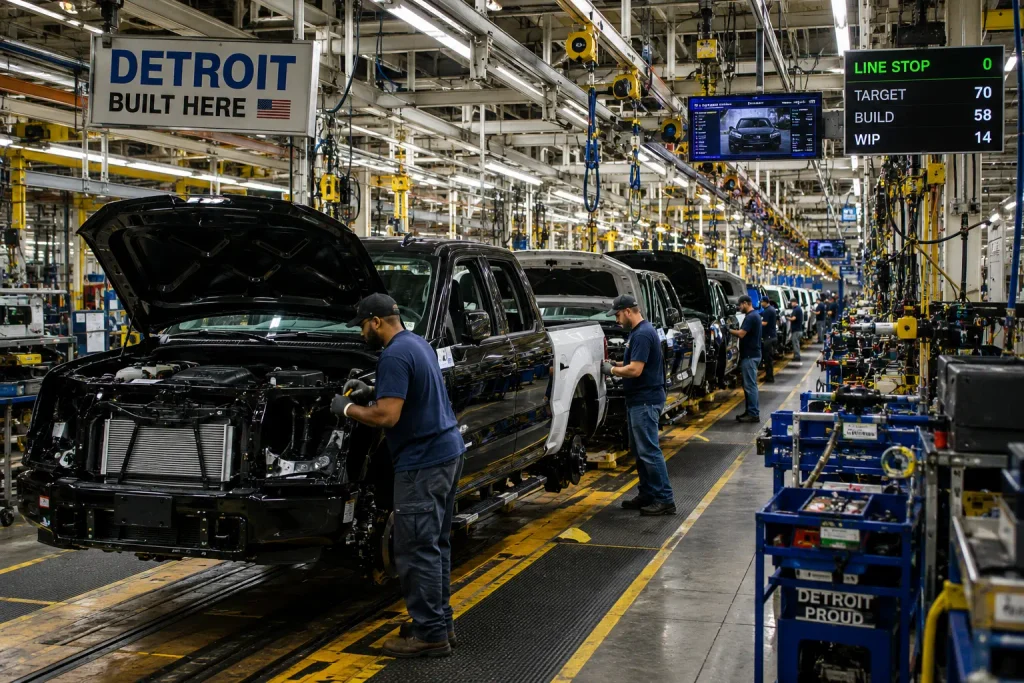
Yes, and the picture depends heavily on which company — and increasingly, which specific plant — you’re talking about. Michigan’s auto employment isn’t moving in one direction across the board.
Stellantis’s Michigan headcount has fallen over the past year, and GM’s Michigan workforce has also shrunk, even as GM keeps investing in its downtown Detroit headquarters. Ford has bucked the trend, actually growing its Michigan workforce over the same period.
The bigger pattern isn’t simple growth or decline — it’s retooling, meaning plants are being paused, idled, or restructured as automakers change what vehicles they’re building. We’ll walk through exactly what that looks like on the ground in the next section.
What this means for you: Job security increasingly depends on which vehicle a plant is scheduled to build next, not just how the parent company is doing overall. If you or someone in your household works in Detroit auto manufacturing, skills that transfer across gas, hybrid, and electric production lines are worth more right now than skills tied to a single powertrain.
3. Are Electric Vehicles Really Changing Detroit?
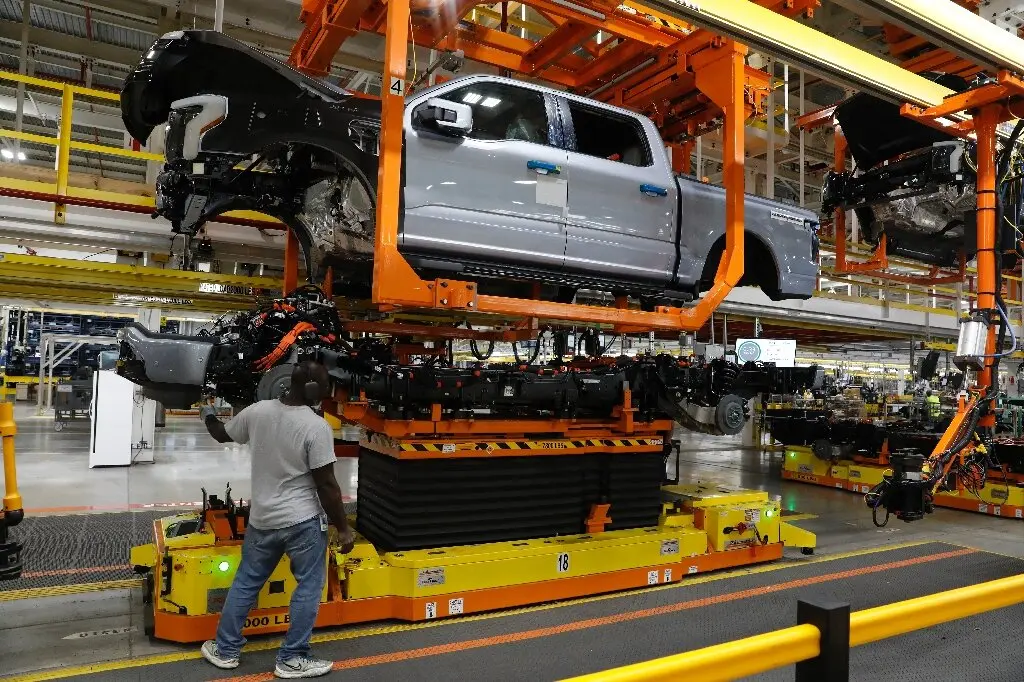
Not the way automakers expected a couple of years ago. Detroit’s EV industry has hit real turbulence, and it started with a policy change: the federal $7,500 EV tax credit (plus a related $4,000 credit for used EVs) expired at the end of September 2025.
The effect was immediate. EV sales fell more than 30% in the months that followed, with some measures showing a year-over-year drop of over a third by the end of 2025. Hybrids surged instead — a record number were sold in the final quarter of 2025, and nearly one in five vehicles sold that quarter was a hybrid.
Ford, GM, and Stellantis have together taken tens of billions of dollars in charges tied to reversing their EV strategies: canceling or delaying models, slowing planned production shifts, and retooling EV-designated factories back to gas-powered vehicles. GM has been the outlier, publicly staying committed to EVs for the long term while betting demand recovers as prices and charging access improve.
What this means for you: If you were counting on a federal discount to make an EV affordable, that incentive is gone, and any automaker rebate covering the gap is usually temporary. And if you work at or near a plant that was retooled for EV production, don’t assume that’s the final chapter — these facilities keep getting adjusted again based on real-time demand.
4. What Is Happening Inside Detroit-Area Auto Plants?
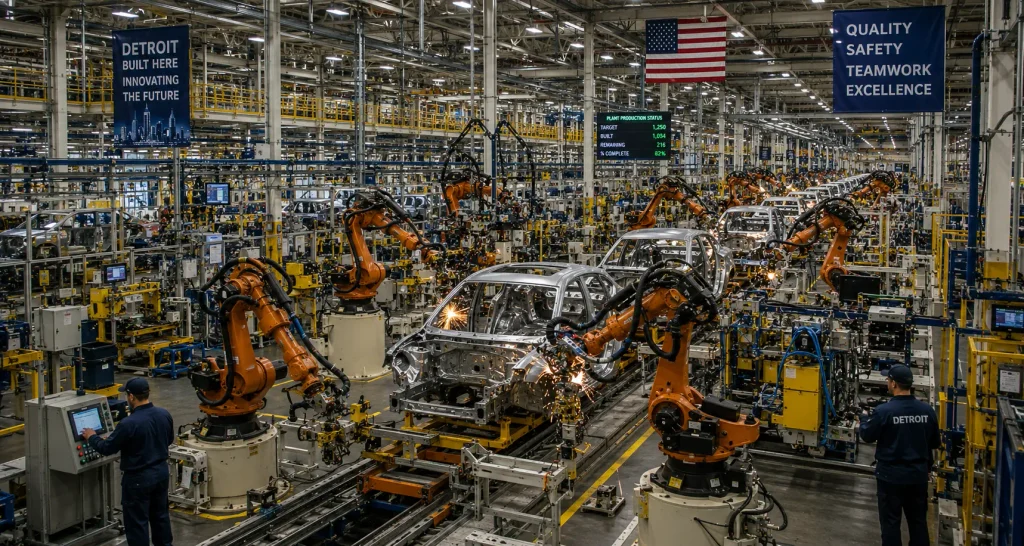
A lot — and it’s the clearest window into where auto jobs and investment are actually headed. Individual Michigan auto plants are being retooled, expanded, or scaled back almost in real time as automakers react to tariffs and the EV slowdown.
GM recently announced it will lay off 350 workers at its Lansing Grand River Assembly and Lansing Regional Stamping plants as part of a $1.25 billion retooling. This isn’t a plant closing — it’s a shift back to gas-powered production, specifically a next-generation Cadillac CT5, after the site had been positioned for EV work. Employees are expected to be called back once the changeover finishes.
On the other side of the ledger, Stellantis announced a roughly $13 billion investment spanning Michigan, Illinois, Ohio, and Indiana. That includes new jobs at its Warren Truck Assembly Plant and additional investment at its Detroit Assembly Complex for future SUV and Durango production later this decade.
What this means for you: Detroit auto factories aren’t simply “open” or “closed” — they’re constantly being repositioned for whichever vehicle sells best next. If a plant near you shows up in the news for a layoff, it’s worth checking whether it’s a permanent cut or a retooling pause, since those have very different implications for the local economy and for workers expecting to be called back.
5. Will Used Cars Become More Affordable?
Probably not soon, and that’s because the used car market in Detroit doesn’t move on its own — it follows what’s happening with new vehicles. When tariffs and trade uncertainty push new car prices higher, buyers who’d normally purchase new often shift into the used market instead, which pushes used vehicle prices up rather than relieving them.
The mix of vehicles coming off lease also matters. As automakers adjust EV and hybrid production, the used inventory of those vehicle types is shifting in ways that are harder to predict than in a stable market — and older used EVs now carry more uncertainty around battery health and resale value, since the federal used-EV credit has also expired.
What this means for you: If you’re shopping for an affordable used car in Detroit, get financing pre-approved so you know your real budget, and compare a specific vehicle’s price against regional averages rather than national ones. Waiting for prices to drop meaningfully isn’t a safe bet given how unsettled new-vehicle pricing is right now — but shopping later in a model year, or considering a hybrid over a scarce used EV, can still help stretch your budget.
6. Are Cars Becoming Too Complicated for the Average Driver?
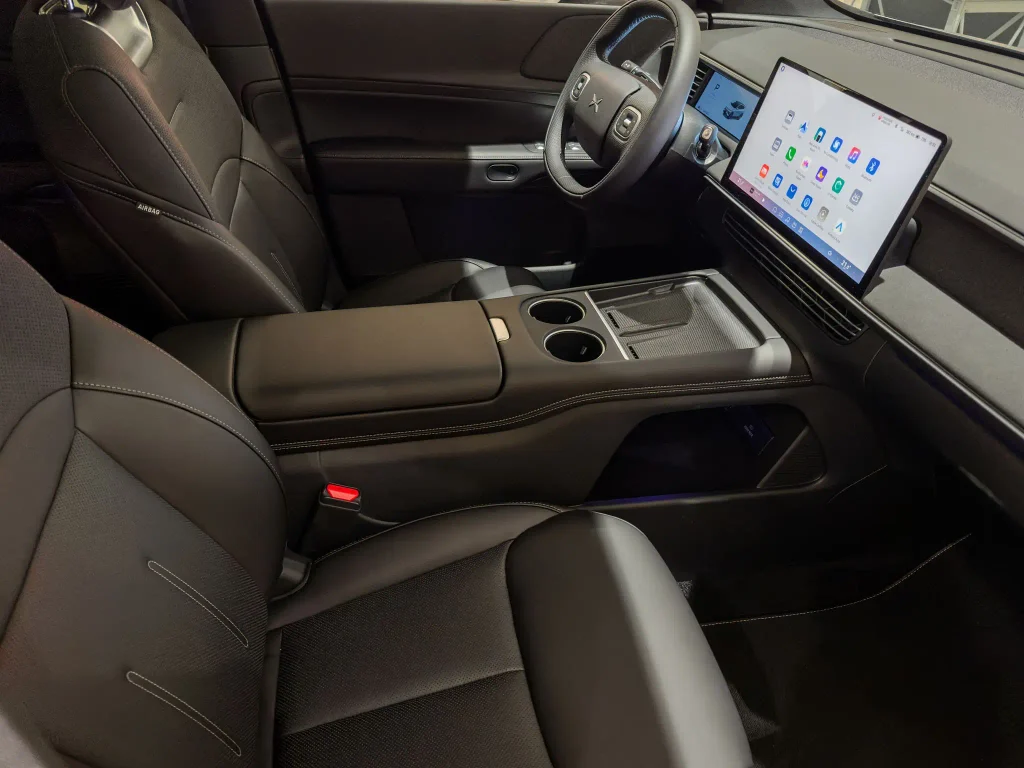
For a lot of drivers, yes — and vehicle technology is now a bigger part of ownership than horsepower or styling ever was. Modern cars increasingly come loaded with driver-assistance systems, large touchscreens, over-the-air software updates (meaning the car’s software gets updated automatically, similar to a phone), and cameras and sensors that support things like lane-keeping and automatic braking.
These features genuinely improve safety in many cases. But they also add a learning curve, and glitchy software or a confusing touchscreen is now one of the most common complaints in vehicle owner surveys.
There’s a cost angle too. More sensors and cameras mean more parts that can fail or need recalibrating, and some automakers now charge subscription fees for features that used to be a one-time purchase, like heated seats.
What this means for you: Before buying, test-drive the actual infotainment and safety-tech setup, not just the vehicle itself. A car that’s mechanically great but frustrating to use every day can sour ownership fast — and it’s worth asking upfront which features come with a subscription.
7. Could Your Next Car Repair Cost You More?
Almost certainly, and the technology in the section above is a big reason why. Bumpers and windshields packed with sensors mean even a minor fender-bender can now require expensive recalibration of cameras and radar systems, not just body work — pushing up car repair costs across Detroit and the rest of Michigan.
Parts costs have risen too, alongside broader tariff pressure on steel, aluminum, and imported components. EVs bring their own complexity: battery packs are expensive to replace, and not every independent shop is equipped or trained to service EV-specific systems, which can push owners back toward pricier dealer service departments.
What this means for you: A few things help control costs — staying current on manufacturer software updates (since some issues that used to need a shop visit can now be fixed remotely), asking whether a shop is certified for ADAS calibration (the sensor and camera recalibration mentioned above) before a repair, and, for EV owners, checking what’s covered under your battery warranty before assuming a repair is out of pocket.
8. Why Should Detroit Residents Care About the Auto Industry?
Because the Detroit auto industry’s footprint goes far beyond factory employees. Michigan is the country’s largest auto-producing state, home to 25 original equipment manufacturers (the companies that design and build the vehicle, commonly shortened to OEMs) and 95 of the top 100 North American suppliers, with the highest concentration of engineers in the country.
Roughly one in five jobs in Michigan is tied to the automotive and mobility sector — an estimated $348 billion in annual economic output, or about 27% of the state’s entire GDP. That reach extends well past the assembly line: supplier companies, tooling shops, logistics firms, and the restaurants and small businesses near manufacturing communities all rise and fall with the industry’s health.
State policy plays a real role here too. Industry groups like MichAuto, the Detroit Regional Chamber’s automotive arm, have spent 2026 holding roundtables across the state to build a policy roadmap for Michigan’s next governor, warning that automotive businesses could look elsewhere if the state doesn’t keep investing in workforce, infrastructure, and innovation.
What this means for you: Major investment announcements — like Stellantis’s $13 billion, multi-state commitment — ripple outward into local tax revenue and hiring at businesses that never touch a car. Plant slowdowns, even temporary ones, tend to show up quickly in local spending. This is why an auto industry downturn “reaching beyond the factory” isn’t just a phrase — it’s how Detroit’s broader economy actually works.
9. Will AI and Robots Change Auto Jobs?
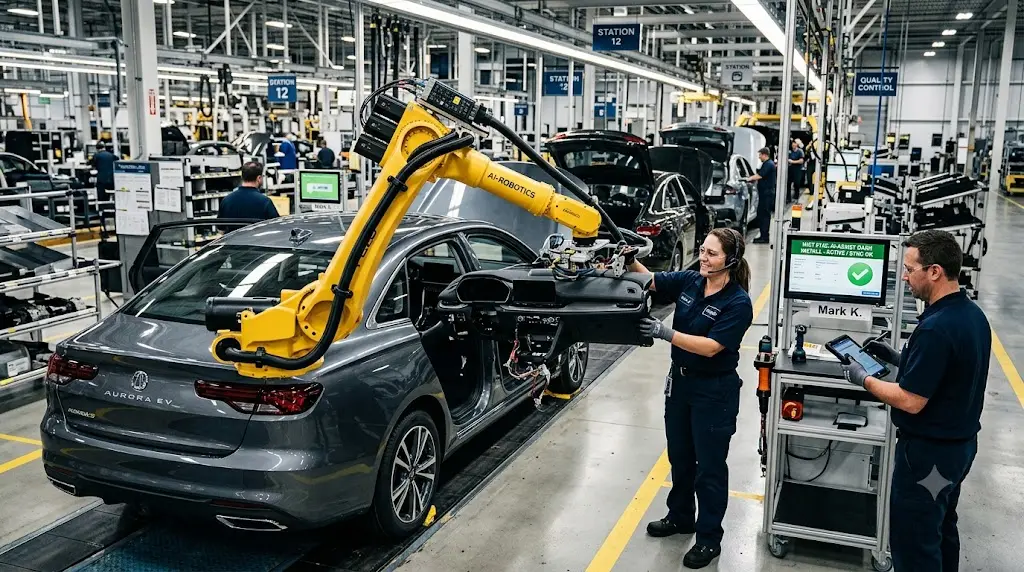
It’s already happening, and it’s showing up first in office jobs rather than the factory floor. GM, Ford, and Stellantis have together cut more than 20,000 U.S. salaried positions — about 19% of their combined white-collar workforce — from recent peaks, citing “transformation” and efficiency alongside the broader rise of AI tools that can automate engineering, IT, and administrative work. GM alone recently cut several hundred more salaried jobs concentrated in IT roles in states including Michigan.
On the factory floor, automation has been part of auto manufacturing for decades, but newer AI-assisted robotics are taking on more complex tasks — quality inspection, predictive maintenance, and precision assembly that used to require manual adjustment.
What this means for you: The likely trend isn’t that assembly-line jobs vanish overnight — it’s that the mix of in-demand skills keeps shifting toward people who can work alongside automated systems and troubleshoot software. If you or a family member works in or is considering Detroit’s auto industry, technical and digital skills are becoming more valuable than traditional manufacturing experience alone, while purely repetitive roles are the most exposed over time.
10. What Could Detroit’s Auto Industry Look Like in the Next 5 Years?
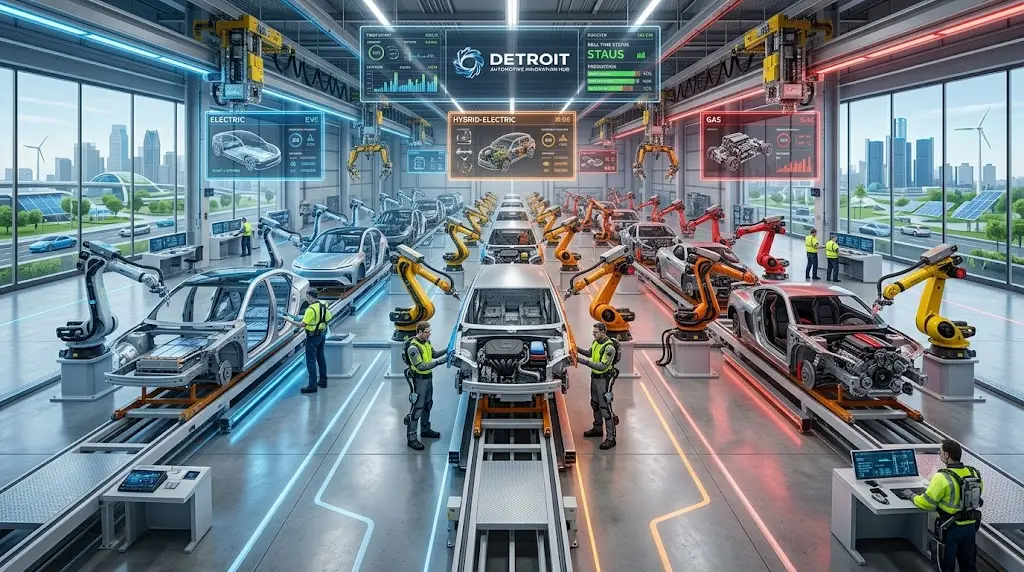
Less like a straight line toward electric vehicles and more like a genuine mix — gas, hybrid, and EV models coexisting on the same lots and, in some cases, the same factory floors — as automakers hedge against policy swings and shifting consumer demand.
Expect more retooling announcements like the one at Lansing Grand River, where a plant slated for EV work pivots back to a familiar gas-powered model, and more multi-state investment commitments like Stellantis’s that hedge across powertrains rather than betting on one. Vehicle technology will keep advancing regardless of what’s under the hood, and trade policy is unlikely to settle down soon, especially with a revised North American trade deal still being negotiated.
Michigan politics will help decide how this plays out locally. 2026 is an open-seat governor’s race — Gretchen Whitmer is term-limited — and voters will choose between Republican Rep. John James, who won his primary with President Trump’s endorsement, and Democratic Secretary of State Jocelyn Benson, who won her primary decisively, in the November 3 general election. State incentive packages — the kind that have funded plant retoolings and new investment in recent years — are a direct lever the next governor will control.
What this means for you: This is a “quiet” issue in the sense that it won’t dominate headlines the way tariffs or EV sales numbers do. But a state that falls behind on auto investment shows up later as fewer jobs and fewer dollars flowing through Michigan’s economy — the kind of effect residents feel indirectly, sometimes years after the decisions that caused it.
What Does All This Mean for You?
Strip away the headlines and it comes down to three questions.
- What could affect your wallet? Tariffs, trade-policy changes, and the loss of EV tax credits are pushing new vehicle prices in an unpredictable direction, and used car prices tend to follow. Repair costs are climbing too, driven by more sensors, pricier parts, and EV-specific service needs.
- What could affect your job or the local economy? Plant retooling — not simple growth or decline — is the defining trend right now, and automation and AI are reshaping both factory and office roles. Because roughly one in five Michigan jobs connects to the auto industry, these shifts touch far more than assembly-line workers.
- What should you watch over the next few years? The outcome of U.S.-Mexico trade talks over vehicle content rules, how automakers balance gas, hybrid, and EV production as demand shifts, and how Michigan’s next governor approaches auto investment and incentives.
Detroit’s auto industry has never really been just about cars rolling off a line. It shapes what you pay at the dealership, where your neighbors work, how your commute might change, and how the city and its suburbs keep developing. Keeping half an eye on it isn’t just industry-watching — it’s practical for anyone building a life in and around Detroit.
For more on how these shifts are playing out locally, check out Detroit Weekly News’ ongoing coverage of Michigan auto plant announcements, EV incentives, and the 2026 governor’s race.
Is the Detroit auto industry struggling right now?
It’s not struggling so much as adjusting. Tariffs, the end of EV tax credits, and a slowdown in electric vehicle demand are forcing GM, Ford, and Stellantis to retool plants and shift production — but Michigan auto jobs and investment are still moving, just unevenly across companies and plants.
Why are new car prices going up in Detroit and Michigan?
Tariffs on vehicles, parts, steel, and aluminum are adding billions in costs for automakers, and much of that gets passed on to buyers. Proposed changes to North American trade rules could push new vehicle prices higher still, though the exact impact varies by automaker and model.
Will used car prices in Detroit come down soon?
Not likely in the near term. When new car prices rise, more buyers shift into the used car market, which pushes used vehicle prices up rather than down. The expired federal used-EV tax credit has added extra uncertainty around used EV pricing specifically.
Are electric vehicles still a good option in Michigan?
EVs remain an option, but the math changed when the federal $7,500 EV tax credit expired in September 2025. EV sales dropped sharply afterward while hybrid sales surged, and Detroit’s automakers have scaled back several EV production plans in response — though GM has stayed committed to EVs long-term.
Are auto plant layoffs in Michigan permanent?
Not always. Some, like the recent Lansing Grand River layoffs, are tied to a temporary retooling process — in that case, a shift from EV to gas-powered production — with workers expected to be called back once the changeover is complete. Others reflect longer-term headcount reductions, so it’s worth checking which type of announcement you’re looking at.
Will AI and automation eliminate auto industry jobs in Detroit?
AI is already reshaping white-collar auto jobs more than factory jobs — GM, Ford, and Stellantis have cut over 20,000 salaried positions combined. On the factory floor, automation is taking on more complex tasks, but the bigger shift is toward workers who can manage and troubleshoot automated systems rather than jobs disappearing outright.
Why does Michigan’s governor’s race matter to the auto industry?
The governor controls state incentive packages that help fund plant retoolings and new investment — the kind of deals that have brought billions into Michigan in recent years. The 2026 race between John James and Jocelyn Benson will shape how competitive Michigan stays for future auto industry investment.
What should Detroit residents watch in the auto industry over the next few years?
Three things: the outcome of U.S.-Mexico trade talks over vehicle content rules, how automakers balance gas, hybrid, and EV production, and how Michigan’s next governor approaches auto industry incentives and investment.
Sources: Detroit News, Reuters, Automotive World, Carscoops, CBT News, CNBC, Crain’s Detroit Business, GM Authority, Ballotpedia, and MichAuto/Detroit Regional Chamber reporting from 2026.






Leave a Reply