

Last updated November 6, 2026
A worker who understands five things, what gear to wear, how to get out, when to refuse a task, how to fight a small fire, and what a training card actually proves, covers most of what a safety program asks of them day to day. None of the five is complicated on its own. Confusion usually comes from mixing them up, treating a company policy as a federal law, or assuming a credential means more than it does. This guide sets out each one against the actual OSHA standard or industry source behind it.

Table of Contents
Why workplace safety rules exist
The Occupational Safety and Health Administration writes the floor, not the ceiling, for what an employer has to do to keep a workplace from killing or maiming the people in it. Its standards rest on a hierarchy: fix the hazard at the source first, through engineering controls like machine guards or ventilation; change how the work gets done second, through administrative controls like rotating a task to limit exposure; and put protective gear on a worker third, only once the first two have been pushed as far as they reasonably can go. Personal protective equipment is the backstop, not the plan.
That ordering matters because it explains why PPE rules read the way they do. OSHA requires an employer to supply it specifically when engineering and administrative controls are not enough to eliminate a hazard on their own, under 29 CFR 1910.132 and the equipment-specific standards that follow it. A respirator or a pair of safety glasses is what is left over once the job has been made as safe as it can be made without them.
What PPE for power tools and equipment should include
The clearest version of this question has a short answer. For hand and power tools, OSHA’s own guidance names eye and face protection and gloves specifically, with hearing protection added wherever noise from the tool or the work area runs high enough to require it. A worker reaching for a grinder, a circular saw, or a drill without those three in place is working outside the standard before the first cut.
The fuller answer depends on the tool and the task, which is why a hazard assessment, not a blanket policy, is supposed to drive the choice.
| Tool or task | Recommended PPE | OSHA reference |
| Drills, saws, grinders | Safety goggles, gloves, hearing protection | 29 CFR 1910.132, 1910.133, 1910.138 |
| Welding | Welding helmet or shield, gloves, flame-resistant clothing | 29 CFR 1910.133, 1910.138 |
| Sanding, cutting | Dust mask or respirator, eye protection | 29 CFR 1910.134 |
| Loud equipment | Earplugs or earmuffs | OSHA hand and power tool guidance |
| Overhead work | Hard hat, safety glasses | 29 CFR 1910.135 |
Respirators carry the heaviest paperwork of the group. Using one is not a matter of handing a worker a mask: 29 CFR 1910.134 requires a medical evaluation to confirm the worker can safely wear one, followed by a fit test matched to that specific respirator model, before it is used on the job. Skipping either step is one of the more common citations OSHA issues under the PPE standards.
Doors leading to exits or exit accesses must be kept clear and visible
Exit route rules sit in 29 CFR 1910.37, and the baseline requirement is the simplest one in this guide: exit routes must be free and unobstructed. Nothing gets stored in them, even temporarily, and that includes the doors themselves. Doors leading to exits or exit accesses must be kept free of decorations or signage that could hide the door or make it harder to find in an emergency, under 1910.37(b)(3), and the broader route has to stay clear of highly flammable decorations under 1910.37(a)(1).
Lighting is the other half of free and unobstructed. A clear path is no use if nobody can see it, so the standard requires every exit route to be lit well enough that a worker with normal vision can see along it, under 1910.37(b)(1).
How should exits be marked in a workplace
The sign requirements are specific enough that a facility can check them with a tape measure. Under 1910.37(b)(2) and (b)(7):
- Every exit must be marked with a sign reading “Exit,” clearly visible from the approach.
- The word itself has to appear in letters at least 6 inches high, with strokes at least three-quarters of an inch wide.
- The sign needs its own light source bright enough to read it from a distance, specifically a surface illumination of at least 5 foot-candles, and it has to be a distinctive color that stands out from its surroundings.
Two more rules round out the marking requirement. Where the route to the exit is not obvious, directional signs have to point the way along the path, under 1910.37(b)(4), with a clear line of sight to the next sign at all times. And any door or passage along the route that is not actually an exit, a closet, a supply room, a stairwell that dead-ends, has to be marked “Not an Exit” or labeled with what it actually is, under 1910.37(b)(5), so nobody loses time at it during an evacuation.
Stop work authority OSHA: your right to refuse dangerous work
Stop work authority and the legal right to refuse dangerous work get used interchangeably, and they are related but not the same thing. Stop work authority is usually a company policy, something a safety program adopts to give any worker, not just a supervisor, standing to halt a task on the spot. The right to refuse is federal, built into how OSHA enforces the general duty clause, and it comes with narrower conditions attached.
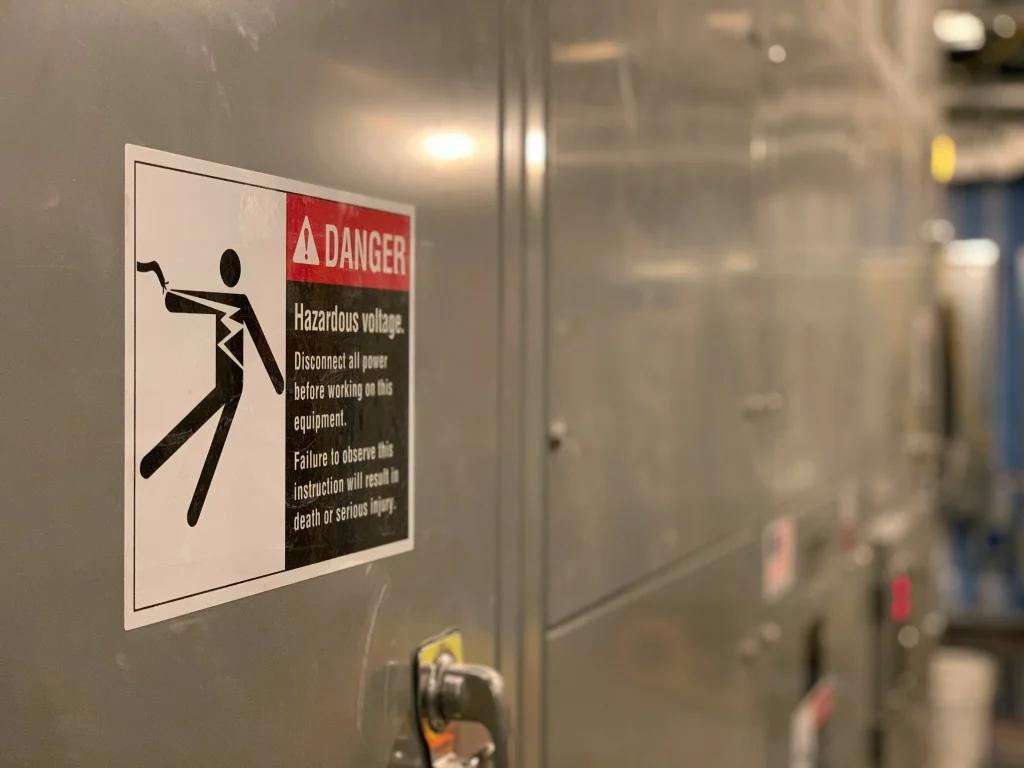
OSHA’s own guidance on workers’ right to refuse dangerous work sets out what has to be true before a refusal is protected. All of the following generally need to apply:
- The worker asked the employer to remove the hazard, where that was possible, and the employer did not.
- The worker genuinely, in good faith, believes an imminent danger exists.
- A reasonable person in the same position would agree the condition presents a real risk of death or serious physical harm.
- The danger is urgent enough that there is not enough time to get it corrected through the normal channels, including requesting an OSHA inspection.
A worker who refuses under those conditions is expected to stay at the worksite, tell the employer why, and ask for other work or for the hazard to be fixed, rather than simply walking off the job. If the employer retaliates, the complaint has to reach OSHA within 30 days of the retaliation, by phone through the agency’s hotline, and the agency investigates from there.
Industry safety committees sometimes point workers to a stop work authority guide published by the United Steelworkers, which lays out how a site-level stop work policy is meant to work alongside, not instead of, the federal right to refuse.
How many times can you use a fire extinguisher?
There is no fixed number. How many times a fire extinguisher can be used depends on its size, how much of its agent a given fire draws down, and whether the fire reignites after it looks out. A large fire extinguisher discharged briefly against a small fire may have plenty left for a second attempt; a small one fully discharged has nothing left no matter how many times someone pulls the trigger.
The technique that governs each attempt is the PASS method, standard across OSHA-aligned fire safety training:
- Pull the pin at the top of the extinguisher to break the tamper seal and unlock the handle.
- Aim the nozzle or hose at the base of the fire, not at the flames themselves.
- Squeeze the handle to release the extinguishing agent, standing back roughly eight feet.
- Sweep the nozzle side to side across the base until the fire appears out, then keep watching it, because fires restart.
A fire extinguisher only puts out a fire that matches the agent inside it. Extinguishers are rated by class: A for ordinary combustibles like wood and paper, B for flammable liquids, C for fires involving live electrical equipment, D for combustible metals, and K for the high-heat oils and fats found in commercial kitchens. Using the wrong class on a fire, water on a grease fire, for instance, can make it worse rather than putting it out.
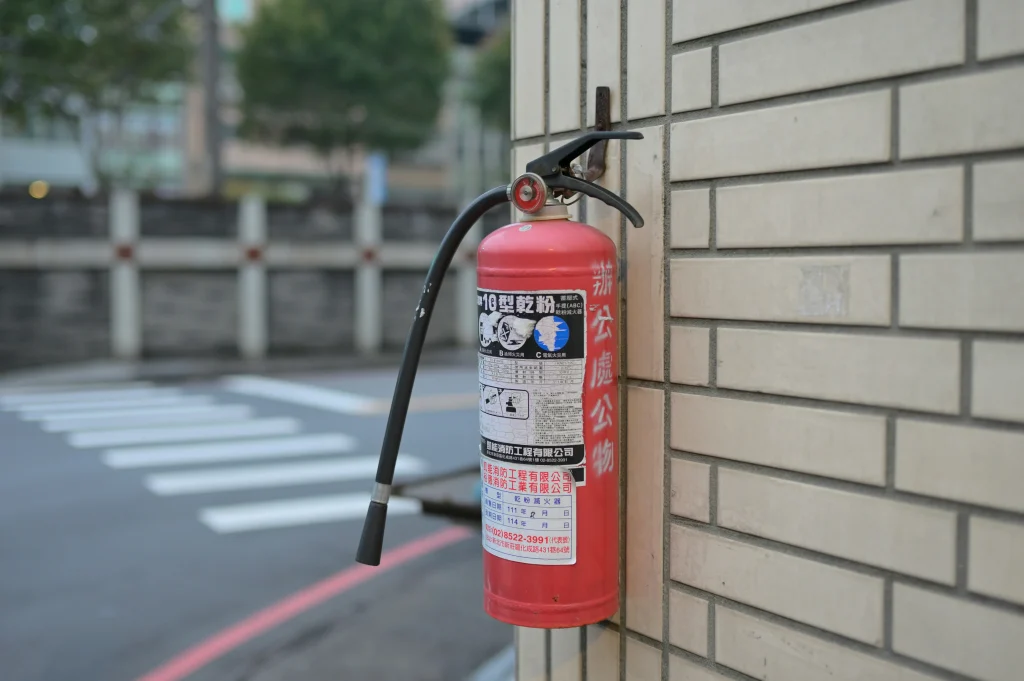
The more important judgment call is not how many times to try, but when to stop trying. OSHA’s evacuation planning guidance is built around fighting only a fire that is still small and controllable, with a clear path out behind the person holding the extinguisher. A fire that keeps growing, fills the room with smoke, or threatens to cut off the exit is a fire to leave, not a fire to try again on.
H2S and PEC SafeLand certification, explained
Oil and gas sites in particular lean on a specific pair of credentials, and the two cover different hazards.
What is a PEC card
Searching the term alone turns up a lot of unrelated results, including picture cards used in speech therapy. In a safety context, a PEC card is the credential a worker receives after completing training through the PEC Safety program, now operated under the Veriforce brand. It shows a site operator that the holder has been through standardized safety instruction covering hazard recognition, operating procedures, and regulatory compliance for oil, gas, and petrochemical work, and it carries a unique ID that an employer can check against Veriforce’s own records before letting someone on site. That is the PEC card meaning in practice: proof of training completed, checkable by anyone who needs to confirm it, not a license or a government-issued qualification.
What is PEC certification
PEC certification is the broader term for completing one of these courses and holding the card that results. The entry point is Basic Orientation, now in its 7.0 version after Veriforce retired the older SafeLandUSA Basic 2021 course in November 2024, and it typically runs a single day online or in person, ending in an assessment. Passing produces the card. From there, employers can require additional endorsements depending on the hazards a specific job involves, with H2S Clear for Energy the most common add-on in oil and gas work.
H2S Clear covers hydrogen sulfide specifically: how to recognize it, since it is colorless and, past a certain concentration, deadens the sense of smell that would otherwise warn a worker away from it, and how to respond if exposure happens. Approved training providers offer both Basic Orientation 7.0 and H2S Clear for Energy, alongside PEC Safegulf, Core Compliance, and refresher courses, plus the card replacement and lookup services an employer or worker needs once a card is issued.
Cards expire and have to be renewed, which is the detail that catches new workers most often. A card that cleared someone for a site two years ago is not necessarily current, and checking is the operator’s job before the first shift, not the worker’s job to assume.
Wearing PPE in the workplace is a shared obligation, not a solo one
An employer who hands out the right gear has done roughly half the job. The rest sits with how consistently it gets worn, maintained, and replaced once it is damaged or past its service life. Wearing PPE in the workplace is the last line of defense specifically because everything ahead of it, the engineering fix, the changed procedure, is meant to have already reduced the hazard as far as it reasonably can. Treating PPE as optional once a task feels routine is how that last line gets skipped on the one day it mattered.
A functioning safety culture sits on top of all five of these pieces rather than beside them: a real hazard assessment behind the PPE list rather than a generic one copied from another site, exit routes checked on a schedule rather than assumed to still be clear, a stop work policy workers have actually been told they can use, extinguishers inspected and tagged rather than decorative, and certification records tracked so an expired PEC card does not surface for the first time during an audit. None of that is unusual. It is what the standards above describe when they are followed rather than filed.
Frequently asked questions
What PPE should I wear when using power tools?
Safety goggles or a face shield, gloves, and hearing protection where the tool or the work area is loud, with a respirator added for dust or fumes. Overhead work adds a hard hat.
How should exits be marked in a workplace?
With a visible sign reading “Exit” in letters at least 6 inches high, lit to at least 5 foot-candles, plus directional signs where the path is not obvious and “Not an Exit” labels on doors that could be mistaken for one.
What is stop work authority?
A policy, usually set by an employer or a site operator, that gives any worker standing to halt a task they believe is unsafe, separate from and broader than the federal right to refuse dangerous work.
Is stop work authority the same as the legal right to refuse work?
No. Stop work authority is a company or site policy. The right to refuse is an OSHA-recognized protection that applies only when a worker has a good faith, reasonable belief of imminent death or serious harm and no time to fix it through normal channels.
How many times can you use a fire extinguisher?
There is no set number. It depends on the extinguisher’s size, how much agent the fire draws down, and whether the fire reignites. The judgment that matters more is knowing when to stop and evacuate instead.
What is a PEC card?
A credential showing a worker completed PEC Safety or Veriforce training, carrying a unique ID an employer can verify. It is most common in oil, gas, and petrochemical work.
What is PEC certification?
Completion of a PEC or Veriforce safety course, starting with Basic Orientation 7.0, with endorsements like H2S Clear for Energy added depending on the hazards a job involves.
What is the difference between SafeLand and H2S certification?
Basic Orientation, the course that replaced SafeLandUSA Basic 2021, is a general safety orientation for oil and gas sites. H2S Clear is specific to hydrogen sulfide recognition and response.
Why is wearing PPE important?
Because it is the backstop after engineering and administrative controls, not the primary fix. When those controls cannot eliminate a hazard entirely, PPE is what stands between a worker and the remaining risk.
How do I get PEC certified?
By enrolling in a course through an authorized training provider, completing the training, and passing the assessment, which generates the card.
Do I need a PEC card for every job?
It depends on the employer and the site. Many oil and gas operators require it before allowing a contractor or worker on location; general construction and other industries typically do not.
Can I use any fire extinguisher on any fire?
No. Extinguishers are rated by class, A through K, matched to the type of fuel burning. Using the wrong one, water on an electrical or grease fire, for example, can make the fire worse.
Final thoughts
None of the five topics above replaces judgment with a rule that covers every situation. OSHA sets the floor on PPE and exit routes, a site sets its own stop work policy on top of the federal right to refuse, an extinguisher only buys time on a fire that is still small, and a PEC card proves training happened rather than guaranteeing a worker will never face something the training did not cover. Employers build the systems. Workers who know what each system actually requires are the ones able to use it when it counts.
Sources
- OSHA, Personal Protective Equipment (OSHA 3151)
- OSHA, 29 CFR 1910.132, general PPE requirements
- OSHA, 29 CFR 1910.134, respiratory protection
- OSHA, 29 CFR 1910.37, exit routes
- OSHA, Workers’ Right to Refuse Dangerous Work
- OSHA, Evacuation Plans and Procedures eTool, portable extinguisher use
- United Steelworkers, Stop Work Authority guide
Leave a Reply