
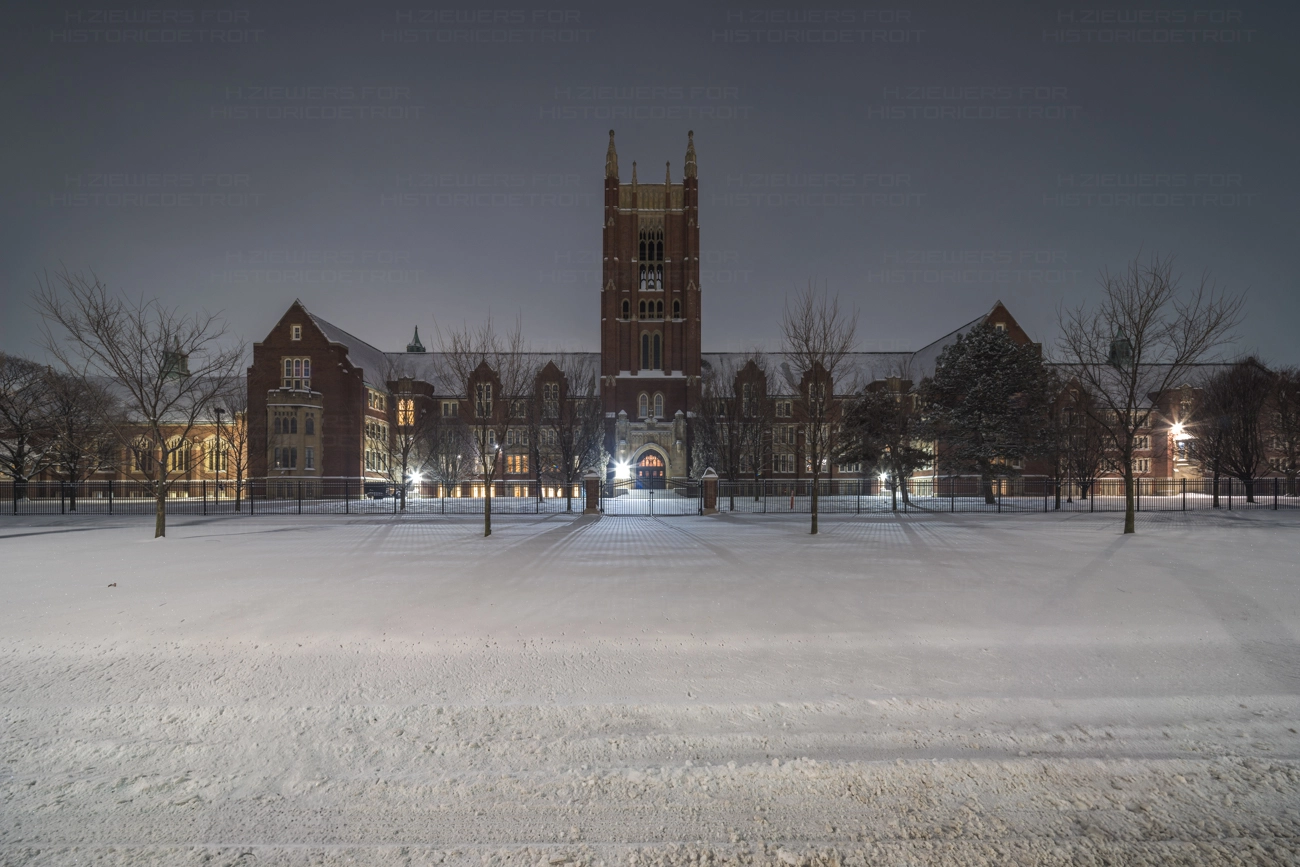
Sacred Heart Major Seminary isn’t a university in the way most people use that word. It’s a Roman Catholic seminary and school of theology, built specifically to form priests, deacons, and lay ministers for the Archdiocese of Detroit and beyond, and that distinction shapes nearly every part of how it operates, who attends, and what it costs.
The seminary opened its first academic year in fall 1919 (see its official history), and more than a century later it remains one of the only institutions of its kind in Michigan: accredited at both the institutional and theological level, serving a graduate School of Theology that’s grown for three straight years, and anchored on a historic campus at 2701 Chicago Boulevard. Here’s how it fits among the universities in Detroit: what it actually offers, who it’s built for, and what it costs to attend.
Table of Contents
What Makes Sacred Heart Major Seminary Different?
Most schools on a “leading universities” list serve a broad range of students chasing a broad range of careers. Sacred Heart Major Seminary serves one mission: forming people for ministry in the Catholic Church. That includes men discerning priesthood through the Master of Divinity, men preparing for the permanent diaconate, and lay men and women pursuing theology degrees, certificates, or ministry credentials without any intent to be ordained.
The applicant pathway differs depending on which of those tracks a person is on. A seminarian entering priestly formation goes through diocesan sponsorship and a formation process well beyond standard academic admissions, while a layperson applying to a Master of Arts in Theology applies much like a graduate student anywhere else. Both end up studying at the same institution, often in the same classrooms, but the road to get there looks different for each.
History and Detroit Mission
Sacred Heart Major Seminary held its first academic year in fall 1919, founded to serve the Archdiocese of Detroit’s need for its own priestly formation program rather than sending candidates elsewhere. More than a hundred years later, that founding purpose hasn’t changed, even as the seminary has expanded well beyond training priests alone.
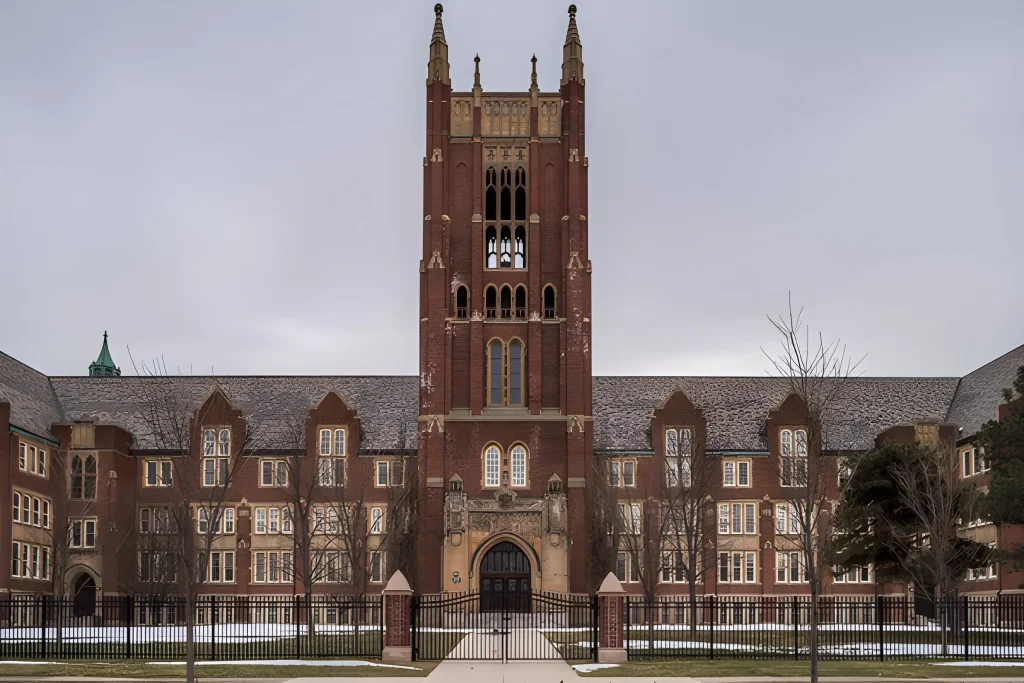
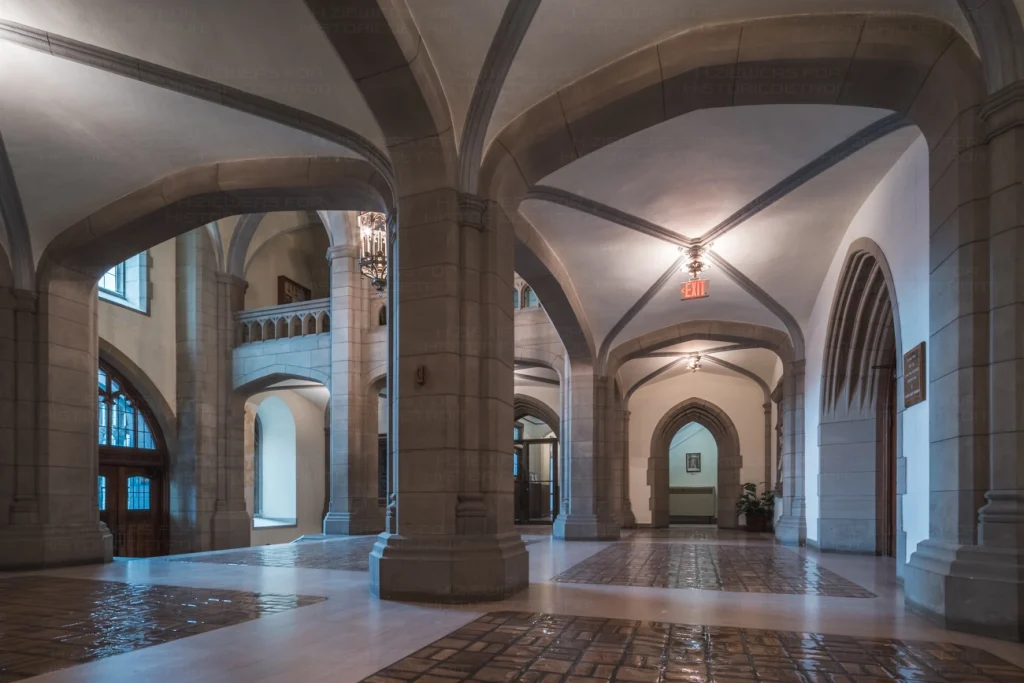
The campus itself, at the corner of Chicago Boulevard and Linwood, reflects that long history: an English Tudor and Neo-Gothic building that has anchored Catholic theological education in Detroit for generations. The seminary now serves not just the Archdiocese of Detroit but regional dioceses more broadly, along with religious orders and lay students with no diocesan affiliation at all.
Programs and Degrees
Sacred Heart Major Seminary splits its academics into two divisions: the College of Liberal Arts for undergraduate-level study, and the School of Theology for graduate and pontifical degrees.
Associate of Arts in Ministry
The Associate of Arts in Ministry (A.A.M.) is one of the seminary’s entry-level credentials, built for students pursuing formal ministry preparation without committing to a full bachelor’s degree.
Undergraduate Theology and Ministry
The Bachelor of Arts requires 120 credits, with at least 30 completed in residence at Sacred Heart and a 2.0 minimum GPA, and students choose a major in either Philosophy, which works through figures like Thomas Aquinas and includes Latin coursework, or Pastoral Theology. Both tracks require three formation sessions covering discernment, theological reflection, and spiritual direction, a reminder that even the academic degrees here carry a formation component most college majors don’t.
Master of Divinity
The Master of Divinity (M.Div.) is reserved for men in priestly formation. It’s the seminary’s signature graduate program and the degree most directly tied to ordination.
MA in Theology and MA in Pastoral Studies
Unlike the M.Div., the Master of Arts in Theology and the Master of Arts in Pastoral Studies (M.A.P.S.) are open to lay men and women, religious, and permanent diaconate candidates, making them the most common path for non-seminarians pursuing a graduate theology credential.
Continuing and Online Education
For students who want to start smaller, Sacred Heart offers a Basic Diploma in Catholic Theology and a six-course Certificate in Catholic Theology that can be completed entirely online in English, a path that stacks directly into the A.A.M. or B.A. degree later if a student decides to continue. The seminary also holds ATS approval for comprehensive distance education, meaning a student can complete more than half of a full degree remotely.
What this means for you: if you’re a working adult or parish volunteer curious about formal theological study but not ready to commit to a full degree, the online certificate track is a lower-stakes way to start, and the credits don’t disappear if you later decide to pursue the associate or bachelor’s degree.
Accreditation and Academic Recognition
Sacred Heart Major Seminary carries two layers of accreditation. The Higher Learning Commission (HLC) has accredited the institution continuously since 1960, with its most recent renewal in 2023. The Association of Theological Schools (ATS), the specialized accreditor for theological education, has accredited Sacred Heart in good standing since 1991, with its most recent renewal in 2024 running through a comprehensive evaluation in spring 2034, a status confirmed on the seminary’s ATS member school profile.
That dual accreditation matters for a practical reason: it confirms both that the institution itself meets general higher-education standards and that its specific theology degrees meet the standards of the field’s own accrediting body, a distinction worth understanding before enrolling in any seminary or divinity program.
Admissions and Formation Process
Admissions at Sacred Heart Major Seminary work differently depending on the program. Graduate degree applicants to the Master of Arts or Master of Arts in Pastoral Studies are required to submit GRE scores, though the Director of Admissions may waive that requirement for applicants who’ve already completed at least nine graduate credits with a 2.7 GPA or better at an ATS- or CHEA-accredited institution. Commuter degree applicants also submit two letters of recommendation, ideally including one from their pastor, along with a roughly 500-word statement of spiritual and academic intent.
Seminarians entering priestly formation go through a separate, more extensive discernment and formation process coordinated with their home diocese, well beyond the standard academic application. New students who aren’t ready to commit to a full degree can also audit courses or take up to twelve graduate credits without matriculating, by submitting an application, official transcripts, and completing an admissions interview. Full requirements and current deadlines are on the seminary’s how to apply page.
Tuition, Financial Support, and Diocesan Sponsorship
Tuition and fees at Sacred Heart Major Seminary vary significantly by program and by whether a student is a sponsored seminarian or a lay commuter student, and that distinction is worth understanding before assuming a single number applies to every student.
| Program (2026–27) | Per-Credit Rate | Annual Resident Package |
| College of Liberal Arts (undergraduate) | $700/credit | $42,620, includes $14,700 room and board |
| School of Theology (M.Div., MA, M.A.P.S., S.T.B.) | $950/credit | $53,120, includes $14,700 room and board |
| Licentiate in Sacred Theology (S.T.L.) | $1,020/credit | Charged per credit, plus $1,900 summer residency |
Seminarians living in residence typically have tuition and room and board sponsored by their home diocese or religious order, which means the $42,620 and $53,120 resident packages above rarely come directly out of a seminarian’s own pocket. Lay and commuter students, by contrast, pay the per-credit rate directly, face modest semester fees in the range of $60 to $150, and can apply for federal financial aid through the FAFSA, institutional scholarships, or Permanent Diaconate Tuition Assistance for diaconate candidates.
What this means for you: if you’re a layperson considering a theology degree here, don’t assume the headline resident-package figures apply to you. Most lay students pay by the credit hour as a commuter, which brings the real cost down substantially compared to the bundled seminarian numbers.
Campus and Detroit Location
Sacred Heart Major Seminary sits at 2701 Chicago Boulevard in Detroit, at the corner of Chicago Boulevard and Linwood, on a campus whose English Tudor and Neo-Gothic architecture reflects its early-twentieth-century founding. Not every student lives on campus full time; seminarians in residence are joined by commuter students, parish-based learners, and a growing number of online students taking advantage of the seminary’s distance-education approval.
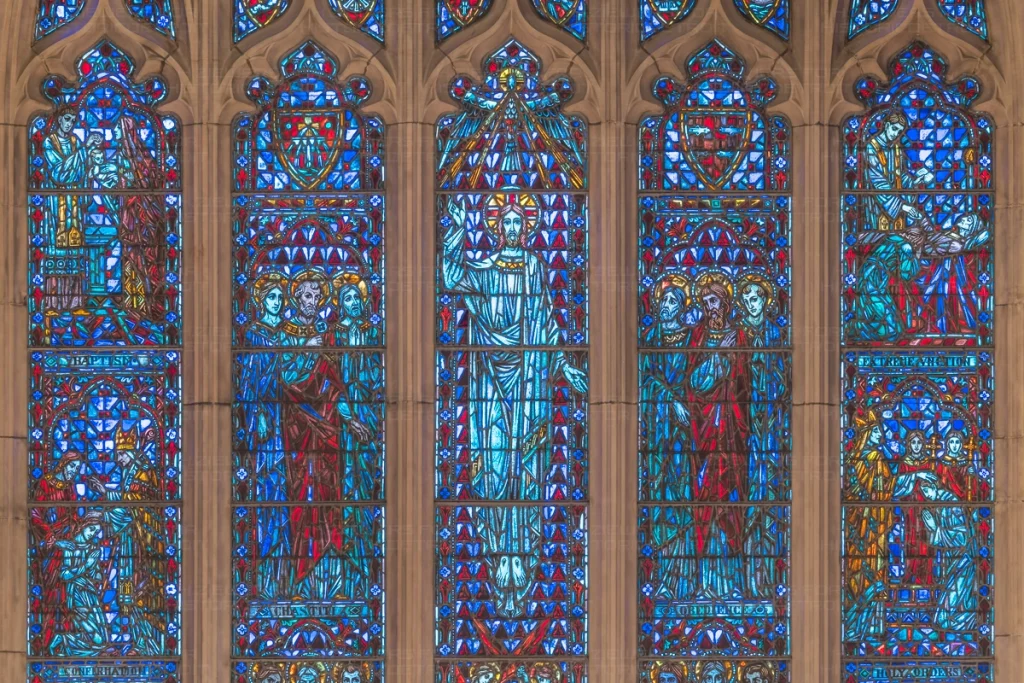
Confirm current facilities and visit information directly with the seminary before planning a trip, since specifics can shift from what’s described here. For context on the surrounding neighborhoods, see our guide on how safe Detroit is.
Who Should Study at Sacred Heart?
Good for: students discerning priesthood, diaconate, lay ecclesial ministry, or advanced Catholic theological study, not a general undergraduate search.
If you’re looking for a broad liberal arts education, a large campus community, or a degree unrelated to ministry or theology, Sacred Heart isn’t built for that. See Detroit Weekly News’ guide to leading universities in Detroit for how it compares to the city’s other institutions, including the Jesuit-and-Mercy-founded University of Detroit Mercy just a few miles away.
Frequently Asked Questions About Sacred Heart Major Seminary
What is Sacred Heart Major Seminary known for?
It’s known as Detroit’s Roman Catholic seminary and school of theology, forming priests, deacons, and lay ministers since its first academic year in fall 1919. It holds both Higher Learning Commission and Association of Theological Schools accreditation.
Can laypeople study at Sacred Heart Major Seminary?
Yes. While the Master of Divinity is reserved for men in priestly formation, the Master of Arts in Theology, Master of Arts in Pastoral Studies, undergraduate degrees, and online certificates are all open to lay men and women, religious, and permanent diaconate candidates.
What degrees does Sacred Heart offer?
Offerings range from a Basic Diploma and six-course Certificate in Catholic Theology up through an Associate of Arts in Ministry, a Bachelor of Arts in Philosophy or Pastoral Theology, a Master of Divinity, a Master of Arts in Theology or Pastoral Studies, and pontifical degrees including the Baccalaureate and Licentiate in Sacred Theology.
Is Sacred Heart Major Seminary accredited?
Yes, at two levels. The Higher Learning Commission has accredited the institution continuously since 1960, most recently renewed in 2023, and the Association of Theological Schools has accredited it in good standing since 1991, most recently renewed in 2024.
How much does the seminary cost?
For 2026–27, undergraduate tuition runs $700 per credit hour, and School of Theology graduate tuition runs $950 per credit hour, with resident packages including room and board at $42,620 and $53,120 respectively. Seminarians in residence typically have those costs sponsored by their home diocese; lay commuter students pay per credit and may qualify for financial aid.
How do you apply to the seminary?
Graduate applicants to the MA or MAPS submit transcripts, recommendations, a statement of intent, and typically GRE scores, though the GRE may be waived with sufficient prior graduate coursework. Seminarians entering priestly formation go through a separate discernment process coordinated with their home diocese.
Where is Sacred Heart Major Seminary?
The seminary is located at 2701 Chicago Boulevard in Detroit, at the corner of Chicago Boulevard and Linwood.
Is it a general undergraduate university?
No. Sacred Heart Major Seminary is a specialized Catholic theological institution built around priestly and diaconal formation and ministry education, not a general-purpose university, though it does offer standalone undergraduate and certificate programs in theology.
Final Thoughts
Sacred Heart Major Seminary occupies a category of its own among Detroit’s universities: a theological institution built around formation, not a general degree. Its School of Theology enrollment has grown for three consecutive years, its accreditation runs through both the Higher Learning Commission and the Association of Theological Schools, and its programs serve everyone from priesthood candidates to lay parish volunteers taking a single online course. Confirm current tuition, admissions requirements, and program availability directly with the seminary before applying, since those details can shift from one academic year to the next.
Sources consulted:
- Sacred Heart Major Seminary, official site
- Sacred Heart Major Seminary, History
- Sacred Heart Major Seminary, Academics
- Sacred Heart Major Seminary, Admissions
- Sacred Heart Major Seminary, How to Apply
- Sacred Heart Major Seminary, Graduate Admissions
- Sacred Heart Major Seminary, 2026–27 Tuition and Fees
- Sacred Heart Major Seminary, Accreditation
- Association of Theological Schools, Sacred Heart Major Seminary profile
- Association of Theological Schools, 2025–26 Annual Data Tables
Leave a Reply