
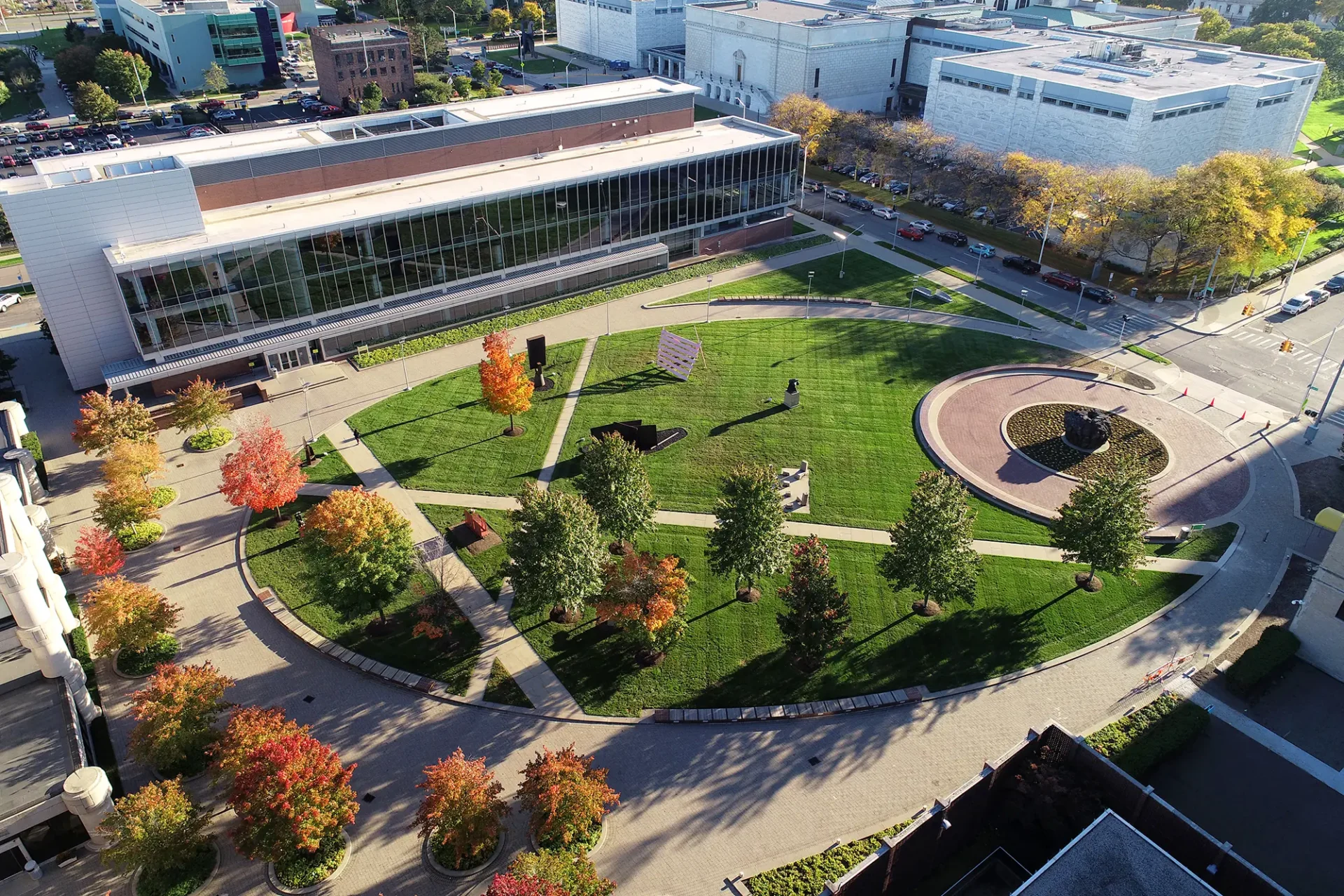
College for Creative Studies isn’t trying to be a comprehensive university, and it never has been. It’s a specialist art and design college, built around studio practice and portfolio development, with a transportation design program that has shaped the look of cars for more than half a century. That focus is the whole point: every student here is working toward a specific creative discipline, not sampling a broad menu of majors.
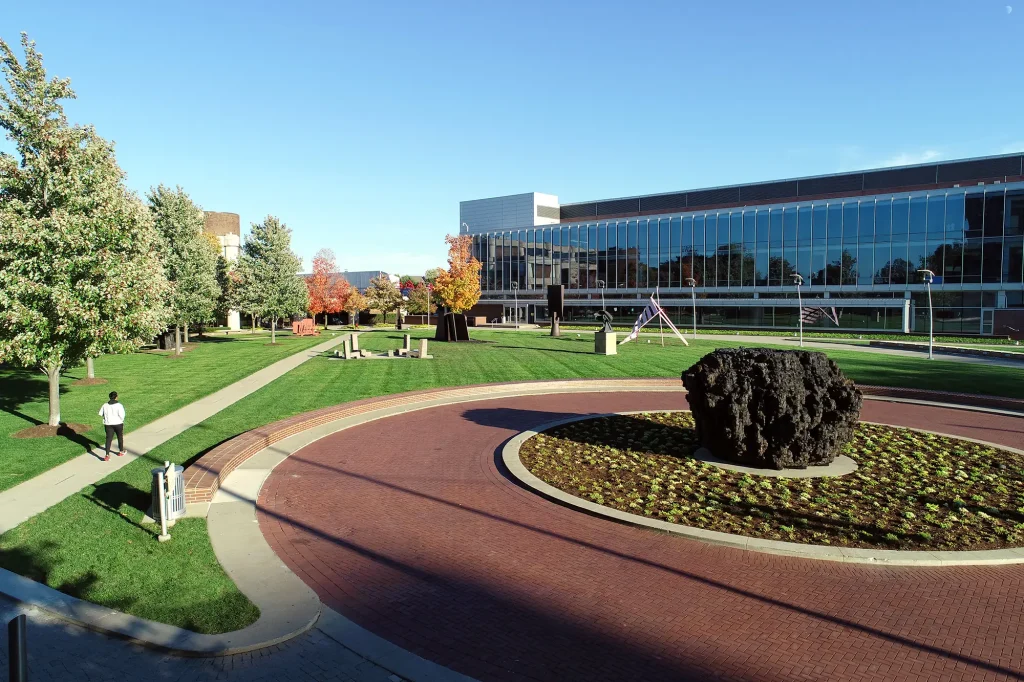
Roughly 1,200 degree-seeking students study across two Midtown Detroit campuses, with a 9:1 student-to-faculty ratio and a retention rate that beats the national average by a wide margin. Here’s what CCS actually offers, what it costs after aid, and who it fits among the universities in Detroit.
Table of Contents
What Makes CCS Different?
A CCS education runs on studio hours, not lecture halls. Full-time students in the Bachelor of Fine Arts track typically spend 18 hours a week in studio instruction against just 6 hours of academic coursework, a ratio that tells you plainly where the college’s priorities sit. Every BFA requires 121 total credits, split between 75 studio credits and 46 in general and liberal arts study, starting with a shared first-year Foundation curriculum in drawing, color theory, and basic 2D and 3D design before students specialize.
That studio-first model sits inside a city with deep creative and industrial roots, giving CCS students direct access to Detroit’s design, mobility, arts, and cultural sectors in a way few other art schools can match.
History: From Arts and Crafts to Creative Education
CCS traces back to 1906, according to its official history, when it began as the Detroit Society of Arts and Crafts. Its defining moment came in 1933, when its gallery drew national attention for formally recognizing automobile design as a legitimate art form, a claim that still describes its most famous program today. The college gained authorization to offer a Bachelor of Fine Arts in industrial design in 1962, a milestone that marked its shift from an arts-and-crafts society into a degree-granting creative college. The Detroit Historical Society’s Encyclopedia of Detroit offers independent context on that history.
Programs and Areas of Study
CCS organizes its academic offerings around specific creative disciplines rather than broad departments.
Transportation Design
Transportation Design remains the program CCS is most famous for, and with good reason: it’s been shaping automotive and mobility design education for more than 60 years. The program enrolls 101 undergraduates and 24 graduate students, making it one of the larger specialized programs on campus, and it carries STEM designation at both the BFA and graduate level.
Product and Industrial Design
Product Design extends the same industrial design lineage that earned CCS its first BFA authorization in 1962, now applied to consumer products, furniture, and physical goods beyond the automotive world.
Communication and Interaction Design
Communication Design and Strategy covers branding, visual communication, and interactive media, another STEM-designated BFA that blends traditional design thinking with digital tools.
Fine Arts, Crafts, and Photography
Studio Art and Craft, Photography, and Interdisciplinary Art and Design round out CCS’s fine arts offerings, each giving students a dedicated studio track rather than a general art major.
Entertainment Arts
Entertainment Arts, covering animation, concept design, and game design, has grown into one of CCS’s largest undergraduate departments, with 274 students, trailing only Illustration’s 279. It’s a reminder that while Transportation Design built the college’s reputation, the entertainment and game industries now pull in the largest cohorts.
Graduate Design
At the graduate level, CCS offers Master’s and Master of Fine Arts programs in Transportation Design, Color and Materials Design, User Experience Design, Design for Sustainability, and Interdisciplinary Design and Media, serving 58 graduate students total. A fully online Master of Professional Studies in User Experience Design runs at a flat $29,907 for the complete four-semester program, a notably different cost structure than the on-campus graduate tracks.
What this means for you: if Transportation Design is what drew you to CCS, know that Illustration and Entertainment Arts are actually the college’s two largest undergraduate programs by enrollment today. All three share the same studio-intensive model, so the “signature program” and the “most popular program” aren’t the same thing here.
Transportation Design and Detroit’s Auto Industry
CCS’s connection to the automotive industry isn’t incidental, it’s the program’s entire reason for existing, dating to that 1933 gallery recognition of car design as art. Students in the program build portfolios directly aimed at mobility and automotive design studios, a natural fit given Detroit’s position as the historic center of American car manufacturing. The program now also carries a STEM designation at the undergraduate, master’s, and MFA levels, a detail that matters for international students relying on OPT work authorization after graduation.
Campus and Creative District
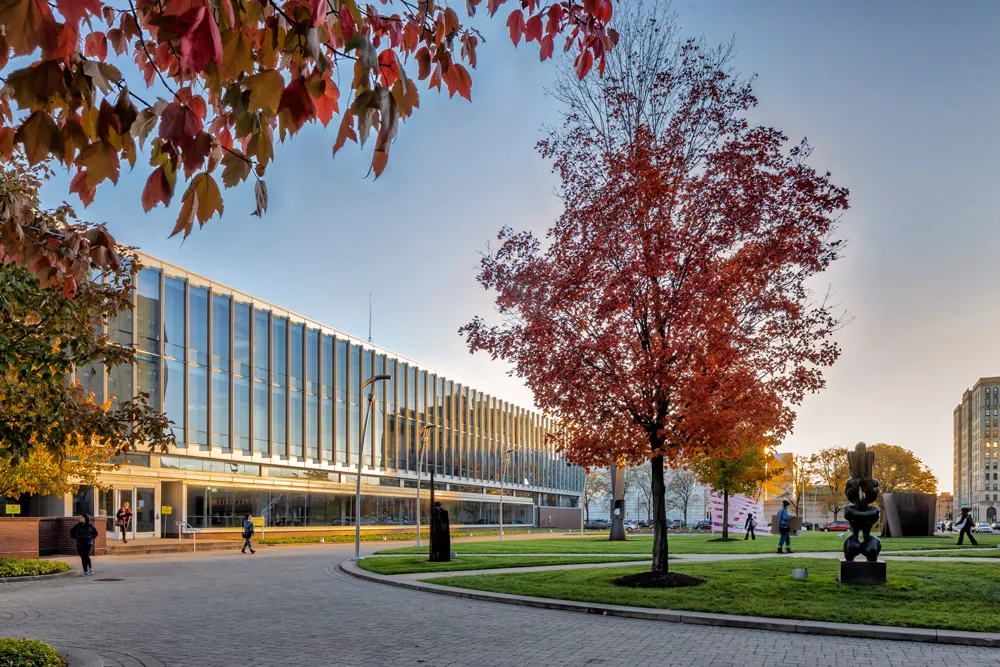
CCS operates across two Midtown Detroit locations: the Walter and Josephine Ford Campus at 201 E. Kirby, sitting directly adjacent to the Detroit Institute of Arts, where CCS students get free admission, and the Charles H. Wright Museum; and the A. Alfred Taubman Center for Design Education at 485 W. Milwaukee in New Center.
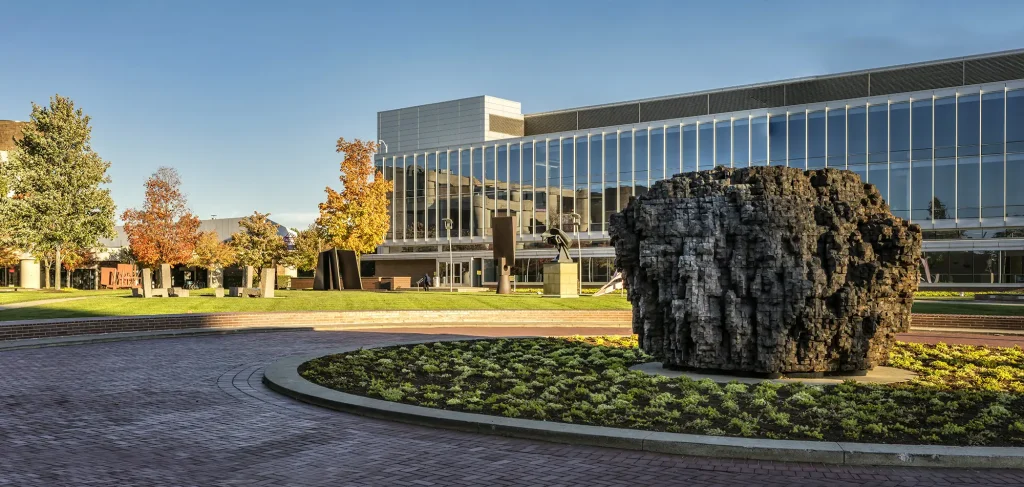
On-campus housing serves 536 students, roughly 47% of the undergraduate body, split between apartment-style units at the Art Centre Building on the Ford Campus and loft-style units at the Taubman Center. That’s a meaningfully residential campus for a specialized art college, giving students sustained access to studio space outside of scheduled class hours. Beyond the studio, our guides to museums in Detroit and things to do in Detroit cover what’s worth your time in the surrounding Cultural Center.
Tuition, Scholarships, and Financial Aid
For 2026-27, CCS lists full-time undergraduate tuition at $55,950 a year, plus $1,400 in mandatory fees. On its own, that figure sits well above most of Detroit’s other universities, and it’s easy to stop reading right there. Don’t.
| 2026–27 Figure (Undergraduate) | Amount |
| Sticker tuition | $55,950 |
| Mandatory fees | $1,400 |
| Average scholarship and grant package (Fall 2026) | $36,607 |
| Average net tuition paid | $19,343 |
Ninety-eight percent of CCS students receive some form of financial aid, and the college automatically reviews every admitted applicant for merit scholarships, which renew with a 2.5 GPA. For incoming Fall 2026 students, the average scholarship and grant package came to $36,607, which brings the average net tuition actually paid down to $19,343, a discount of roughly 65% off the sticker price. CCS also partners with the Detroit Promise Grant, offering a last-dollar, tuition-free bachelor’s path for a limited number of eligible Detroit residents each fall, along with the Kalamazoo Promise Grant and Battle Creek’s Bearcat Advantage.
What this means for you: the $55,950 number is the headline figure, not what most students pay. Run your own financial aid estimate before ruling CCS out on cost, since the average student here pays closer to $19,000 once scholarships and grants are applied.
Admissions, Portfolio, and Application
Portfolio requirements vary by major at CCS, so a Transportation Design applicant and an Illustration applicant won’t submit the same kind of work, and prospective students should check the specific requirements for their intended program rather than assuming a single standard applies across the college. CCS offers first-year, transfer, and international application pathways, and every admitted student is automatically considered for merit scholarships without a separate application.
High school students with strong outside recognition have several targeted scholarship opportunities worth knowing about, including awards tied to FIRST Robotics, National Scholastic Art and Writing Gold and Silver Medals, and YoungArts recognition, each worth thousands of dollars toward tuition.
Student Life and Career Preparation
With 90% of undergraduates attending full time and a 9:1 student-to-faculty ratio, CCS keeps class sizes small and critique-driven, the standard model for a serious studio art education. The college’s 84% first-to-second-year retention rate and 70% graduation rate both outperform national averages, a reasonable proxy for how engaged students stay once they’re immersed in a program built entirely around their chosen discipline.
Who Should Choose CCS?
Good for: students committed to art, design, or transportation design who want studio-centered learning and a creative education embedded directly in Detroit’s design and cultural scene.
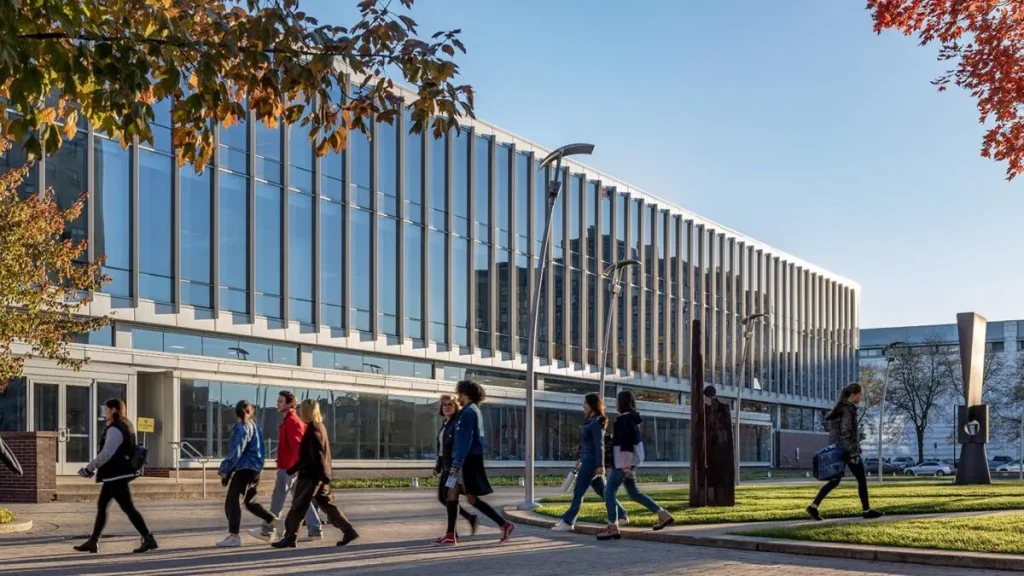
Students looking for a broad liberal arts experience, a wide range of non-creative majors, or a large traditional university campus should look elsewhere. See Detroit Weekly News’ guide to leading universities in Detroit for how CCS compares to the city’s other specialized and comprehensive institutions.
Frequently Asked Questions About College for Creative Studies
What is College for Creative Studies known for?
CCS is best known for its Transportation Design program, which has shaped automotive and mobility design education for more than 60 years, though Illustration and Entertainment Arts are now its two largest undergraduate departments by enrollment.
How much does CCS cost?
Sticker tuition for 2026-27 is $55,950 plus $1,400 in fees, but 98% of students receive financial aid, and the average scholarship and grant package for incoming Fall 2026 students was $36,607, bringing average net tuition down to roughly $19,343.
Does CCS offer transportation design?
Yes, it’s the college’s signature program, enrolling 101 undergraduates and 24 graduate students and carrying STEM designation at both levels, tracing back to CCS’s 1933 recognition of automobile design as a legitimate art form.
Do applicants need a portfolio?
Yes, portfolio requirements apply across CCS’s creative majors, and the specific expectations vary by program, so Transportation Design and Illustration applicants, for example, submit different kinds of work. Check requirements for your specific intended major before applying.
What degrees does CCS offer?
CCS offers Bachelor of Fine Arts, Bachelor of Arts, and Bachelor of Design degrees across disciplines including Transportation Design, Product Design, Illustration, Entertainment Arts, Photography, Fashion Design, Interior Design, and the newer Human-Centered Robotics Design, plus graduate Master’s and MFA programs in several design fields.
Does CCS offer scholarships?
Yes. Every admitted student is automatically reviewed for merit scholarships, and CCS also offers targeted awards tied to FIRST Robotics, National Scholastic Art and Writing recognition, and YoungArts, along with partnerships like the Detroit Promise Grant for eligible Detroit residents.
Where is CCS located?
CCS operates two campuses in Midtown Detroit: the Ford Campus at 201 E. Kirby, next to the Detroit Institute of Arts, and the Taubman Center for Design Education at 485 W. Milwaukee in New Center.
Is CCS a university or art school?
CCS is a specialist art and design college, not a comprehensive university. It’s authorized to grant bachelor’s and master’s degrees and is accredited by the Higher Learning Commission and the National Association of Schools of Art and Design, but its entire academic structure is built around creative disciplines rather than a broad range of majors.
Final Thoughts
College for Creative Studies occupies a clear niche among Detroit’s universities: a studio-intensive art and design college with a historic hold on automotive design education and, these days, equally strong programs in illustration and entertainment arts. The sticker tuition looks steep, but the real number most students pay, after an average $36,607 in scholarships and grants, lands much closer to a mid-range private college. Students who already know they want a creative career, and who thrive on critique and studio hours rather than lecture halls, tend to find exactly what they’re looking for here. Confirm current tuition, portfolio requirements, and scholarship details directly with CCS before applying, since program specifics shift from year to year.
Sources consulted:
- College for Creative Studies, History
- College for Creative Studies, About Us and Fast Facts
- College for Creative Studies, Academic Programs
- College for Creative Studies, Undergraduate Transportation Design
- College for Creative Studies, Admissions
- College for Creative Studies, Transfer Admissions
- College for Creative Studies, International Admissions
- College for Creative Studies, 2026–27 Undergraduate Tuition and Fees
- College for Creative Studies, Graduate Tuition and Fees
- College for Creative Studies, Undergraduate Scholarships
- College for Creative Studies, 2026–27 Academic Catalog (mission and accreditation)
- Detroit Historical Society, Encyclopedia of Detroit: College for Creative Studies
Leave a Reply