
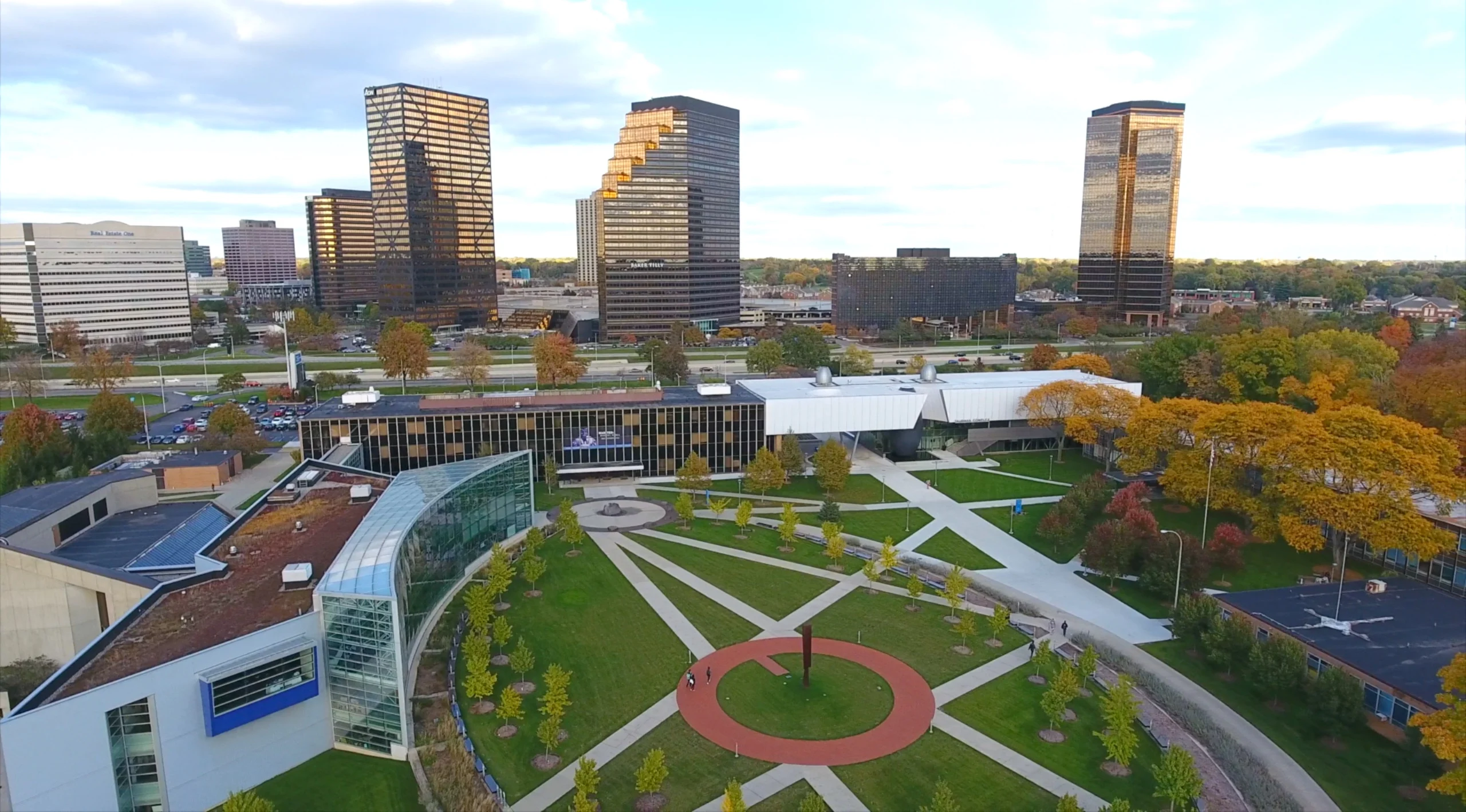
Lawrence Technological University runs on a simple premise: theory means little until you’ve built something with it. That hands-on approach has defined the school since 1932, and it’s why a university with roughly 3,000 students in Southfield now carries a Carnegie Foundation research classification, nine ABET-accredited engineering programs, and a research budget that grew more than five-fold in four years.
LTU isn’t inside Detroit city limits, it sits about 15 miles northwest in Southfield, but its Detroit Center for Design and Technology in Midtown keeps it tied directly to the city. Here’s what sets Lawrence Tech apart from other Detroit-area universities, what it costs, and who it’s built for.
Table of Contents
What Makes Lawrence Tech Different?
Plenty of universities claim to prepare students for real-world careers. Lawrence Tech structures its entire academic model around that claim, pairing classroom theory with studio work, labs, co-ops, and project-based courses across every college. The university now spans five colleges and more than 100 academic programs, a jump from the four colleges some of its own older institutional materials still reference, after the recent addition of a College of Health Sciences.
That applied focus shows up in results that are easy to point to: a 2025 Carnegie Foundation “R” Research University classification, sponsored research funding that climbed from $1.8 million in 2020-21 to nearly $9.7 million in 2024-25, and a spot among the top five most-recruited campuses in a recent survey of more than 120 Michigan employers, alongside four universities many times its size.
History and Southfield Location
Russell E. Lawrence founded the school in 1932 as the Lawrence Institute of Technology, originally on the site of Henry Ford’s Highland Park Model T plant, a landmark in Detroit’s auto industry history. The university relocated to its current Southfield campus in 1955, on a former General Mills research farm, and adopted its current name, Lawrence Technological University, in 1989.
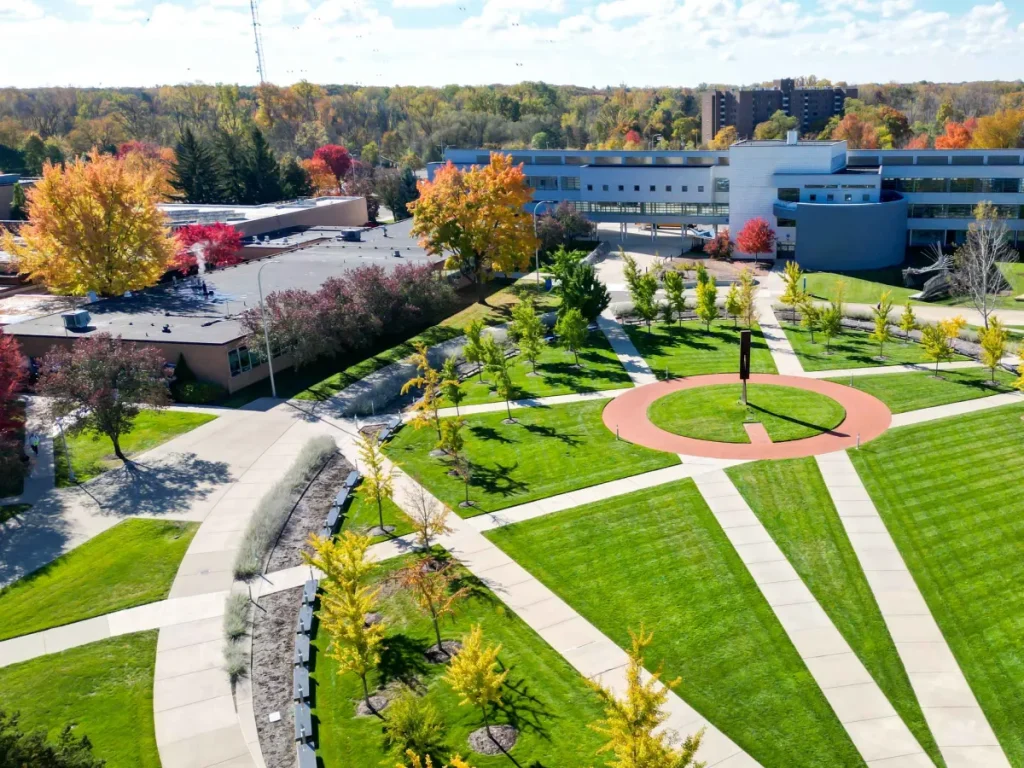
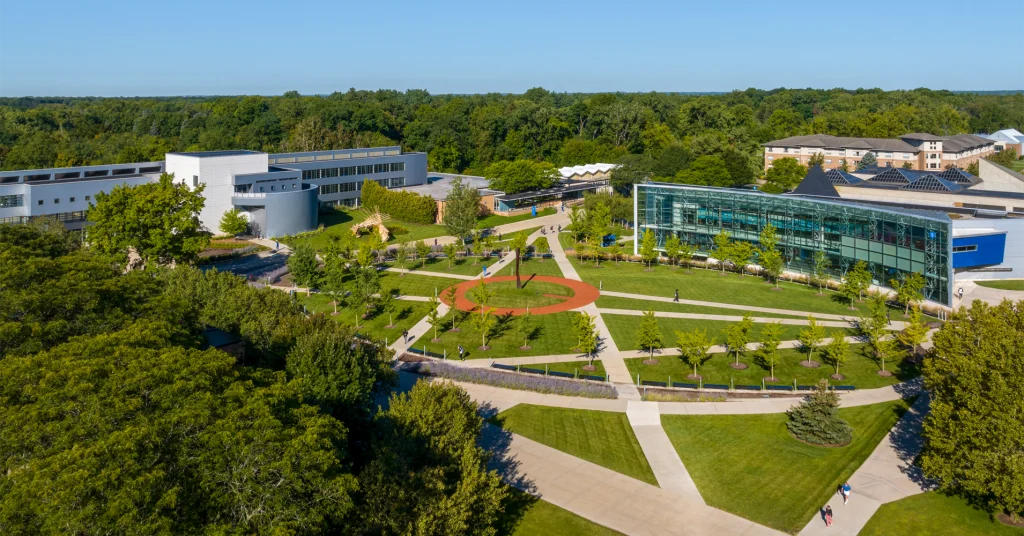
Today that Southfield campus spans 107 acres and 17 major buildings at 21000 West Ten Mile Road. LTU also operates the Detroit Center for Design and Technology, opened in 2014 in Midtown Detroit, giving students a foothold in the city itself even though the main campus sits in the suburbs.
Colleges and Academic Programs
Lawrence Tech organizes its academics into five colleges, each with its own accreditation record and areas of focus.
Engineering
The College of Engineering offers nine ABET-accredited programs, including Biomedical, Civil, Computer, Electrical, Industrial, Mechanical, and Robotics Engineering, the last of which is one of a select few ABET-accredited undergraduate programs in the country explicitly titled Robotics Engineering. The college also runs an integrated five-year Master of Science in Architectural Engineering, one of only two programs nationwide where ABET accreditation attaches directly to the master’s degree itself.
Architecture and Design
The College of Architecture and Design recently earned a ten-year NASAD reaccreditation extension running through 2036, along with an eight-year renewal from the National Architectural Accrediting Board for its Master of Architecture. That program runs as a five-year integrated track participating in the national path to architectural licensure. The college also offers a CIDA-accredited Bachelor of Science in Interior Design and a Product Design program that won the 2026 ICFF WANTED “Best of Schools” Award at New York Design Week.
Business and Information Technology
The College of Business and Information Technology carries AACSB accreditation, placing it among the top 6% of business schools worldwide, with a recent five-year extension through 2028. Programs range from a standard BSBA to integrated 4+1 bachelor’s-master’s tracks in accounting, finance, marketing, sports management, and information technology.
Arts and Sciences
The College of Arts and Sciences covers an unusually wide range for a technological university, including an ACS-accredited chemistry program, computer science with a game software development track, a Master of Science in Artificial Intelligence, and audio engineering technology through its Specs@LTU media program.
Health Sciences
LTU’s newest college offers a CCNE-accredited Bachelor of Science in Nursing, which recently received a ten-year accreditation extension, along with Michigan’s only accredited Master of Science in Cardiovascular Perfusion, a 21-month program combining simulation work with clinical rotations. The college also runs a provisionally accredited Master of Science in Physician Assistant Studies, with tuition for the 2026 and 2027 cohorts frozen at $101,001.90 plus $10,998 in fees.
What this means for you: accreditation at Lawrence Tech works program by program, not university-wide. Engineering programs carry ABET, business carries AACSB, architecture carries NASAD and NAAB, nursing carries CCNE, and so on, so confirm the specific accreditation for whichever program you’re actually applying to rather than assuming one blanket status covers everything.
Engineering, Architecture, and Applied Sciences
Engineering remains Lawrence Tech’s historical center of gravity, and it shows in the depth of ABET-accredited offerings, but the university has clearly pushed to build comparable strength elsewhere. The Centrepolis Accelerator, developed with the Michigan Economic Development Corporation and the City of Southfield, operates on campus as Michigan’s only state-backed incubator dedicated exclusively to hardware, advanced materials, and manufacturing startups, giving engineering and design students direct exposure to early-stage companies working in their own fields.
Campus and Facilities
The Southfield campus includes four residence halls and a signature laptop program that issues every incoming student a university laptop as part of their enrollment, a detail that underscores how deeply LTU’s applied-learning philosophy runs into its everyday operations.
One detail worth clarifying directly: Lawrence Tech owns and preserves Frank Lloyd Wright’s historic Affleck House, donated to the university in 1978, but the house itself sits in Bloomfield Hills, not on the Southfield campus. It’s a genuine piece of LTU’s history and architectural collection, just not a building students will walk past between classes.
Tuition, Scholarships, and Cost of Attendance
For 2026-27, LTU’s estimated freshman undergraduate tuition runs $46,290 for 30 credits, with the full-time undergraduate rate listed at $46,440, plus $2,400 in required registration and resource fees.
| 2026–27 Expense Category | Undergrad On-Campus (30 credits) | Graduate Average (20 credits) |
| Tuition | $46,290–$46,440 | $32,220 |
| Mandatory fees | $2,400 | $1,500 |
| Housing estimate | $7,966 | $9,524 |
| Total estimated cost of attendance | $69,578–$69,728 | $56,166 |
Those figures land well above a public university’s in-state rate, which is typical for a private technological school, but LTU backs it with targeted aid. The inaugural NSF S-STEM I-CAAN Scholars Program, launched for the 2025-26 cohort, awards up to $60,000 over four years to high-achieving students with financial need majoring in biology, chemistry, physics, math, data science, or computer science. LTU is also a designated Military Friendly School for 2026-27, offering a 15% discount on tuition and fees for military students. First-year students should also budget for a $500 laptop deposit and a $250 housing deposit on top of tuition. The registrar’s tuition and fee schedule lists the Board-approved rates, and the university’s tuition and fees page links to current funding options.
What this means for you: the sticker price looks steep, but Lawrence Tech’s scholarship and military-discount programs target specific student groups directly, so it’s worth checking eligibility for the I-CAAN program or the military discount before assuming the full $46,000-plus applies to you.
Admissions and Financial Aid
Lawrence Tech accepts applications through its own online portal and the Common App, with separate pathways for first-year, transfer, and international students. International applicants face firmer deadlines, generally 90 days before the start of a term, so students applying from outside the U.S. should check the current calendar well in advance rather than assuming domestic deadlines apply.
Scholarships and FAFSA-based aid both factor into the final cost, and because several of LTU’s most distinctive programs, architectural engineering, robotics engineering, and cardiovascular perfusion among them, have their own application nuances, prospective students should confirm requirements with the specific program rather than relying on general undergraduate admissions information alone.
Student Life and Career Preparation
With roughly 3,000 students and more than 400 full- and part-time faculty, Lawrence Tech keeps a small-university feel while running 26 varsity NAIA teams, the Blue Devils, across sports from ice hockey to lacrosse to motorsports. Student life leans heavily on the same applied philosophy that defines the classroom: project-based courses, co-ops, and direct contact with the Centrepolis Accelerator’s startup ecosystem give students structured ways to build a resume before graduation, though specific outcomes vary by program and should be confirmed with LTU’s own career services rather than assumed from survey data alone.
Who Should Choose Lawrence Tech?
Good for: students focused on engineering, architecture, design, technology, or applied professional study who want a suburban Detroit-area campus with direct, project-based ties to industry.
Students chasing a traditional liberal arts experience, a large public-university atmosphere, or a campus inside Detroit proper will likely find a better fit elsewhere. See Detroit Weekly News’ guide to leading universities in Detroit for how Lawrence Tech compares to University of Michigan-Dearborn, another engineering-strong school just a few miles away.
Frequently Asked Questions About Lawrence Technological University
What is Lawrence Technological University known for?
Lawrence Tech is known for applied, hands-on education in engineering and architecture, backed by nine ABET-accredited engineering programs, a 2025 Carnegie “R” Research University classification, and close industry ties through its on-campus Centrepolis Accelerator.
Where is Lawrence Tech located?
The main campus sits at 21000 West Ten Mile Road in Southfield, Michigan, about 15 miles northwest of downtown Detroit. LTU also operates the Detroit Center for Design and Technology in Midtown Detroit.
How much does Lawrence Tech cost?
For 2026-27, estimated freshman undergraduate tuition runs $46,290 for 30 credits, plus $2,400 in required fees, before scholarships or financial aid. Graduate tuition for 20 credits runs roughly $32,220. Programs like the Physician Assistant Studies master’s carry separate, program-specific tuition.
Does LTU offer engineering and architecture?
Yes, both are core strengths. Engineering holds nine ABET-accredited programs, including a rare ABET-accredited Robotics Engineering degree, and Architecture and Design holds a ten-year NASAD reaccreditation and an eight-year NAAB renewal for its Master of Architecture.
Is Lawrence Tech accredited?
Yes, both institutionally and at the program level, as listed on the university’s accreditation page. The Higher Learning Commission reaccredited the university through 2030-31, and individual programs carry their own accreditation, including ABET for engineering, AACSB for business, NASAD and NAAB for architecture and design, and CCNE for nursing.
How do I apply to LTU?
Students can apply through Lawrence Tech’s own online application or the Common App, with separate first-year, transfer, and international pathways. International applicants should apply roughly 90 days before their intended term starts.
Does Lawrence Tech offer scholarships?
Yes. The NSF S-STEM I-CAAN Scholars Program offers up to $60,000 over four years for qualifying students in STEM fields with financial need, and LTU offers a 15% tuition and fee discount for military students as a designated Military Friendly School.
Is Lawrence Tech in Detroit?
Not technically. The main campus is in Southfield, roughly 15 miles northwest of downtown Detroit, though LTU operates a satellite design and technology center in Midtown Detroit itself.
Final Thoughts
Lawrence Technological University has built a genuinely distinctive identity among Detroit-area schools: a small, private, applied-learning university that recently earned a Carnegie research classification while still running nine ABET-accredited engineering programs and a direct pipeline into a state-backed hardware startup accelerator. Students drawn to engineering, architecture, or one of its increasingly varied health-science programs tend to find a tightly focused, industry-connected education here. Confirm current tuition, program-specific accreditation, and scholarship eligibility directly with the university before applying, since those details shift from one academic year to the next.
Sources consulted:
- Lawrence Technological University, History
- Lawrence Technological University, Programs directory
- Lawrence Technological University, Apply
- Lawrence Technological University, Tuition and Fees
- Lawrence Technological University, Estimated Cost of Attendance
- Lawrence Technological University, Registrar Tuition and Fee Schedule
- Lawrence Technological University, Accreditation
- Lawrence Technological University, Accolades and Rankings
- Lawrence Technological University, M.S. in Physician Assistant Studies
Leave a Reply