
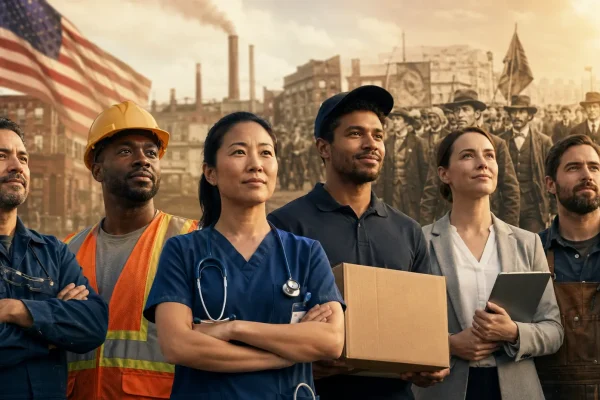
Labor Day is a U.S. federal holiday. It falls on the first Monday of September every year and honors American workers and the labor movement that fought for fair wages, safer workplaces, and reasonable hours along the way. In 2026, that’s September 7. Here’s where the holiday came from, what it actually commemorates, how people mark it today, and the questions people ask most.
What Is Labor Day?
At its core, it’s a day for workers. Not any one trade, not any one industry, just workers, broadly. It recognizes the economic and social contributions of the labor force, and it acknowledges something specific: organized labor is the reason a lot of workplace standards exist at all. The eight-hour day. The weekend. Basic safety protections on the job. Most people never think about where those came from. This holiday is tied to that history.
It’s also a U.S.-only thing. Other countries mark May 1 as International Workers’ Day instead, and that holiday has a different history and a different date; more on that further down.
Why Do We Celebrate Labor Day?
Short answer: to recognize the people who keep the economy running, and to remember what the labor movement actually fought for.
Back in the late 1800s, during the Industrial Revolution, a 12-hour day wasn’t unusual. Neither was a six- or seven-day workweek, or a job with genuinely dangerous conditions and barely enough pay to live on. Children worked those jobs too. Unions formed largely in response as a way for workers to organize and push back, together, for shorter hours, safer conditions, better wages.
A lot of what we now treat as normal workplace protections overtime pay, safety regulations, even the idea of a “standard” workweek traces back to that organizing. Celebrations have gotten a lot more casual since then. Cookouts instead of rallies. But the point of the day, originally, was to give public recognition to labor’s role in American life.
When Is Labor Day?
Always the first Monday in September. Because it’s tied to a day of the week rather than a fixed date, it moves around a little each year, anywhere from September 1 to September 7.
Here’s how it lines up over the next several years:
| Year | Labor Day |
| 2026 | September 7 |
| 2027 | September 6 |
| 2028 | September 4 |
| 2029 | September 3 |
| 2030 | September 2 |
What Is the History of Labor Day?
How Did Labor Day Begin?
It came directly out of the labor movement of the late 1800s. Factories were growing fast during the Industrial Revolution, and workers were often stuck with long shifts, dangerous equipment, and low pay. Unions formed as a response a way to organize and demand something better, whether that meant shorter hours, safer facilities, or the right to bargain collectively. The idea of a holiday honoring workers grew out of that same push.
When Was the First Labor Day Celebrated?
Tuesday, September 5, 1882. New York City. The Central Labor Union organized it, and about 10,000 workers took an unpaid day off to march from City Hall to Union Square, then wrapped it up with a picnic and some speeches.
It went well enough that they did it again the next year, on September 5, 1883.
Who actually came up with the idea? Still debated. Peter J. McGuire, a co-founder of the American Federation of Labor, usually gets the credit. But historians also point to Matthew Maguire, a machinist and secretary of the Central Labor Union, as a likely originator. Over 140 years later, nobody’s fully settled it.
When Did Labor Day Become a Federal Holiday?
After that first parade, cities and states started adopting the holiday on their own, one at a time. Oregon went first, passing a law on February 21, 1887. Colorado, Massachusetts, New Jersey, and New York followed within the same year. By 1894, 23 more states had adopted some version of it.
National recognition, though, came out of something much rougher. In 1894, workers at the Pullman Palace Car Company near Chicago went on strike after the company cut wages without lowering what it charged them to live in its company-owned town. The strike spread nationwide, led in part by the American Railway Union, and several workers were killed in the violence that followed. Congress moved fast in the aftermath, partly as a gesture of reconciliation with organized labor and passed legislation making Labor Day a federal holiday. President Grover Cleveland signed the bill, Senate Bill 730, into law on June 28, 1894. The first Monday in September became a legal holiday, and it still is.
Why Was Labor Day Created?
To give formal recognition to what organized labor was actually fighting for. A few things were central to that fight, and honestly, they still shape labor policy today:
- Shorter working hours moving away from 12-hour, seven-day weeks
- Safer working conditions fewer injuries and deaths in factories, mines, and railroads
- Fair wages pushing back against wage cuts and exploitative pay
- Basic workers’ rights, including the right to organize and bargain collectively
What started as a labor-movement event, full of parades and political speeches, gradually turned into something broader. It still nods to where it came from. But somewhere along the way it also became the marker for summer’s unofficial end.
How Is Labor Day Celebrated?
Today it’s a mix, half rooted in the original purpose, half just modern tradition:
- Parades still happen in some cities, though nowhere near as common as they once were.
- Barbecues and outdoor meals are probably the most common way people mark the day now.
- Family gatherings and community events a lot of people just use the long weekend to see family or hit a local festival.
- Sporting events: college football season tends to kick off right around this weekend.
- Travel and weekend getaways one of the busier travel windows of late summer.
- Sales and shopping events: retailers lean hard on Labor Day weekend, especially for furniture, mattresses, and back-to-school deals.
Worth keeping separate in your head: the parades and union-organized events are the historical thread. The cookouts, the sales, the travel that’s all been layered on top since.
What Is Labor Day Weekend?
Just the three-day stretch Saturday, Sunday, Monday built around the holiday. Since Labor Day always lands on a Monday, most people who get it off end up with a long weekend, not just a single day.
It’s taken on its own identity at this point, separate from the holiday’s original meaning. Widely treated as the unofficial end of summer. A last trip, an outdoor gathering, some kind of send-off before fall’s slower rhythm sets in.
Is Labor Day a Federal Holiday?
Yes. Has been since Grover Cleveland signed it into law on June 28, 1894.
But here’s the part people usually get wrong: federal holiday status mainly covers federal employees, federal offices, and D.C. courts, agencies, and the postal service. It does not automatically mean private employers have to give their staff the day off with pay. Whether you get it off comes down to your employer’s policy, your contract, or state law, not the federal designation by itself. If you’re not sure, just ask.
What Is Open and Closed on Labor Day?
Are Banks Open on Labor Day?
Most major banks close, since it’s a recognized federal holiday. That can vary by institution or branch, though, so double-check with yours if you need to get something done that day.
Is the Post Office Open on Labor Day?
No. The USPS doesn’t deliver mail or open retail locations, same as any other federal holiday.
Are Government Offices Open on Labor Day?
Federal offices are generally closed. State and local offices usually follow suit, but that can vary depending on where you live.
Are Stores and Restaurants Open on Labor Day?
Mostly, yes. Grocery stores, restaurants, and retail chains mostly stay open, and plenty run sales tied specifically to the weekend. Hours might shift from a normal day, so it’s worth a quick check before you head out.
What Is the Difference Between Labor Day and May Day?
Both honor workers. That’s about where the similarity ends: different dates, different origins, different reach.
| Labor Day | May Day |
| First Monday in September, in the U.S. | May 1 |
| U.S. federal holiday | Observed in many countries around the world |
| Honors American workers and labor contributions | Rooted in the international labor movement, including the 1886 Haymarket affair in Chicago |
People mix them up because the theme overlaps. But the U.S. kept them separate on purpose. May Day’s roots were tied to more openly socialist and international labor movements, and by 1894, there was real political motivation in Washington to give the U.S. its own holiday distinct from the internationally observed May 1 date.
Labor Day Facts You Should Know
- Observed on the first Monday in September, so the exact date changes every year.
- Commemorates the social and economic contributions of American workers.
- Became a federal holiday on June 28, 1894, when Grover Cleveland signed the legislation.
- Grew directly out of the 19th-century labor movement and the fight for better working conditions.
- Always lands on a Monday, which is why it creates a three-day weekend for most people.
Frequently Asked Questions About Labor Day
What does Labor Day mean?
It’s a U.S. federal holiday honoring the contributions of American workers and the labor movement that pushed for fair treatment on the job.
Why do we celebrate Labor Day?
To recognize workers’ role in building the economy and remember the labor movement’s fight for better wages, hours, and conditions.
When is Labor Day?
The first Monday of September. In 2026, that’s September 7.
Why is Labor Day always on a Monday?
The 1894 legislation named the first Monday in September specifically, partly to guarantee a full long weekend instead of one day off in the middle of the week.
Who created Labor Day?
Nobody knows for sure. Peter J. McGuire and Matthew Maguire are the two names most often credited, both from 1882.
What is closed on Labor Day?
Banks, post offices, and most government offices, typically. Stores and restaurants mostly stay open, often with sales, though hours can vary.
When was the first Labor Day?
September 5, 1882, in New York City, a parade of roughly 10,000 workers.
Why was Labor Day created?
To honor workers and mark the labor movement’s push for shorter hours, safer conditions, and fair wages during the Industrial Revolution.
Is Labor Day a federal holiday?
Yes, since 1894.
Do all employees get Labor Day off?
Not necessarily. Federal holiday status covers federal employees and offices. Private-sector employees depend on their employer’s own policy.
What is Labor Day weekend?
The three-day stretch from Saturday through Monday around the holiday is widely seen as the unofficial end of summer.
Is Labor Day the same as May Day?
No. Both honor workers, but Labor Day is a U.S. holiday on the first Monday of September, while May Day is observed internationally on May 1 with separate origins.
Key Takeaway: What Is Labor Day?
Labor Day is the federal holiday held every first Monday in September to honor American workers and the labor movement’s fight for fair wages, safer conditions, and reasonable hours. It started informally in 1882. It became law in 1894. And today it’s both a tribute to organized labor and, for most people, simply the marker that summer’s over.
Sources: U.S. Department of Labor, Encyclopaedia Britannica, U.S. House of Representatives Office of the Historian, National Constitution Center, Detroit Weekly News


Leave a Reply